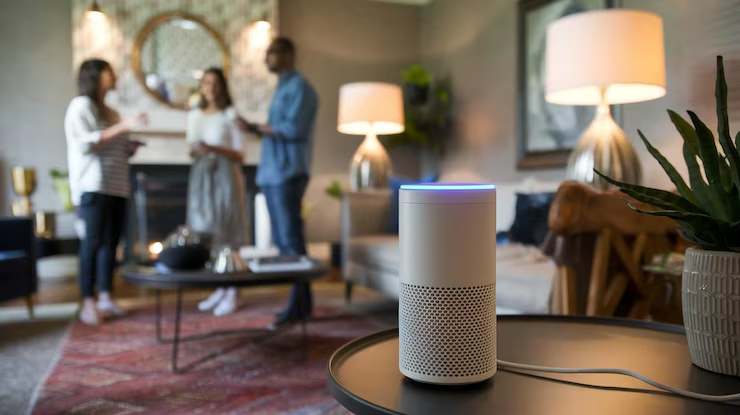
“Turn off all the lights and lock the door.” These simple words can now control your entire home. Voice-controlled home automation has grown from a futuristic concept to an everyday reality for millions of Americans. The number of digital voice assistants in use has jumped from 4.4 billion in 2022 to an expected 8.4 billion by 2024, showing just how fast this technology is taking over our homes.
Smart voice assistants are not just cool gadgets anymore. They’re like the brain for modern smart homes, making everything from your lights to your security work together. This isn’t just about being lazy—it’s changing how we live completely.
The Rise of Voice-Controlled Home Automation
The market for voice-controlled home automation is growing super fast. The market for voice AI in smart homes is expected to be worth around $514.62 billion by 2034. That’s way up from $12.7 billion in 2024. This huge growth shows that people really want this.
Smart voice assistants can do way more than just play music now. They’re now controlling hands-free smart devices all over the house. By the end of 2023, 126 million homes in Europe and North America were “smart.” This shows it’s not just a cool trend; it’s becoming normal.
Home automation with voice commands started out simple, like turning lights on and off. Now, these systems can run your whole morning routine, change the temperature, check your cameras, and even start your coffee pot before you’re out of bed.
How Do Smart Voice Assistants Change Daily Life?
Voice-activated home systems have made controlling your home’s feel super easy. Instead of walking around flipping switches or turning dials, you can just talk. Smart speakers for automation can dim the lights for a movie, turn up the heat, and even change the light color to match your mood.
Effortless Smart Lighting and Climate Control
Google Home integration lets you control a bunch of devices with just one command. You can say “Good morning,” and your lights will slowly turn on, the heat will go to your favorite temperature, and your blinds will open. This stuff wasn’t possible a few years ago, but now it’s pretty standard.
Improve Home Security with Voice-Activated Home Systems
Voice-controlled home automation has made home security way easier to use. Alexa voice control can turn on your security system, show you your camera feed, and lock the doors. You don’t have to remember any codes or mess with an app. The market for smart security is expected to grow from $4.5 billion in 2020 to $12.5 billion by 2025. AI-powered virtual assistants can also help if there’s an emergency, letting you call for help with a simple command.
The Technology Behind Home Automation with Voice Commands
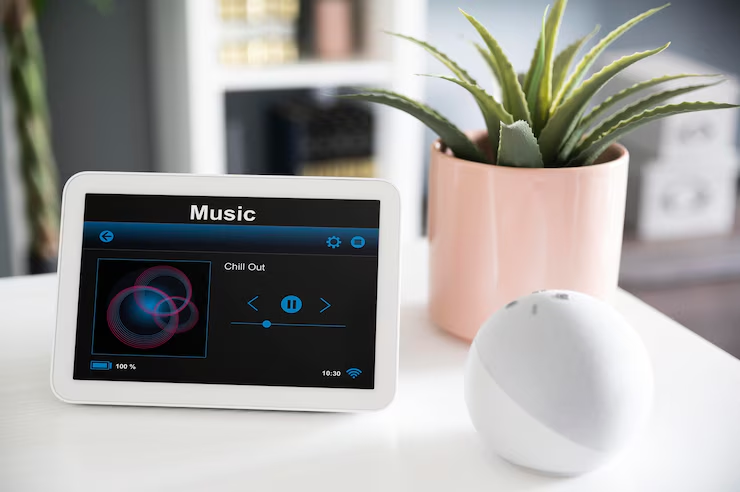
Modern smart voice assistants use fancy tech to get what you mean. You don’t have to say the exact perfect words anymore. They can figure out that “make it warmer” means turn up the heat, or “dim the lights” means make it less bright.
Natural Language: How AI-Powered Virtual Assistants Understand You
AI-powered virtual assistants also learn from you. They remember you like the house at 28 degrees in the morning and 26 at night. This makes voice-controlled home automation feel like it really knows you.
Device Integration: The Power of IoT with Voice Control
The real power of IoT with voice control is getting all your stuff to connect. Smart speakers for automation can now control hundreds of different brands and types of devices. It doesn’t matter if it’s a fridge, a garage door, or a security camera—your voice assistant is the boss. Google Home integration and Alexa voice control systems work with thousands of devices, so you don’t need a bunch of different apps or remotes.
Top Benefits of Smart Living with Voice Assistants
The biggest plus is that it’s just so convenient. The number of people in the US using voice assistants will grow from 145.1 million in 2023 to 170.3 million in 2028. People love hands-free smart devices because they make life easier. It’s especially helpful for older people or anyone who has trouble moving around.
Energy Efficiency and Cost Savings
Voice-activated home systems can really lower your energy bills. Smart thermostats learn when you’re home and adjust the heat. Smart lights make sure they turn off when you leave a room. Homeowners usually save 10-15% on their energy bills after they set up a full voice-controlled home automation system.
Energy Efficiency and Cost Savings
Voice-activated home systems can significantly reduce energy bills by optimizing how and when devices operate. Smart thermostats learn when rooms are occupied and adjust temperatures accordingly. Automated lighting systems ensure lights are only on when needed.
Homeowners typically see 10-15% savings on their energy bills after implementing comprehensive voice-controlled home automation systems. These savings help offset the initial investment costs over time.
Improved Safety and Peace of Mind
Smart voice assistants give you safety features right away. In an emergency, you can turn on alarms or call for help with just your voice. You can also check on your house when you’re not there. Parents can check on the babysitter, and pet owners can see what their dog is up to.
Comparing Popular Smart Speakers for Automation
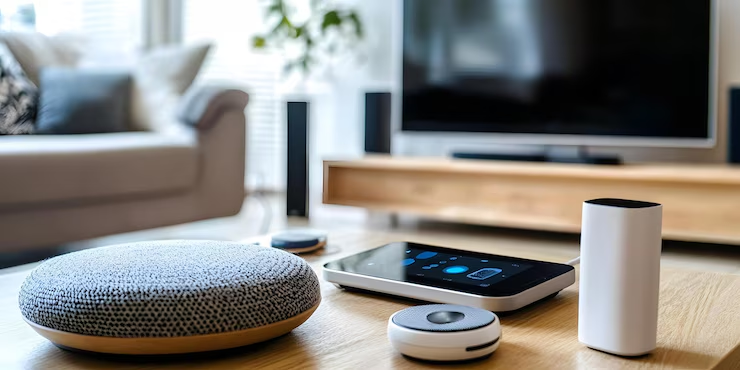
- Alexa voice control is the biggest one in the American smart home market. It works with most devices. 21.2% of people will use Alexa this year. It has a ton of skills and works with so many other companies.
- Google Home integration is really good at understanding what you mean, even if you say it in a weird way. It’s great for complicated tasks and connects perfectly with all of Google’s other stuff. It’s great for families who want to control their home and ask questions using voice tech for smart homes.
- A smart home with Siri and Apple HomeKit is all about privacy and security. It’s for people who really care about their data being safe. It doesn’t work with as many devices, but it’s super secure and works perfectly if you already have Apple products.
Market Growth and the Future of Voice Tech for Smart Homes
The voice-controlled home automation market shows no signs of slowing down. The voice control smart home market size was valued at USD 108.72 billion in 2024 and is expected to reach USD 2.66 trillion by 2037, registering around 27.9% CAGR. This tremendous growth reflects increasing consumer adoption and technological advancement.
AI-powered virtual assistants will continue becoming more intuitive and responsive. Future systems will predict user needs, automate routine tasks without prompting, and provide more natural conversational interactions.
Challenges and Considerations for Smart Homes

There are few challenges which one can face while considering for the Smart Homes. One can check the below mentioned some common challenges which one might can face if they are planning for the smart home.
- Privacy and Security Worries: Voice-activated home systems make some people worry about privacy, since they are always listening for a “wake word.” People worry about who is listening and what they’re doing with the data. Companies are trying to fix this by letting you process things locally on the device.
- Cost and Setup Complexity: Setting up a full voice-controlled home automation system can cost a lot of money and might even need a pro to install it. Figuring out what works with what can be a headache for some people.
- Technical Limitations: Today’s smart voice assistants still mess up sometimes. They can get confused by background noise or if two people talk at once. The tech is way better, but it’s not perfect.
Final Thought: How to Choose Your Voice Assistant
The future for voice control looks amazing. Smart living with voice assistants is becoming a normal part of how we build and live in our homes. When you are selecting the best voice assistant for home automation, consider your existing devices, privacy preferences, and specific needs.
- Alexa voice control has the most device options.
- Google Home integration is better at understanding you.
- A smart home with Siri is best if you want top-notch privacy.
Leave a Reply