Tag: editor choice

  • The Future of Home Automation: AI + Voice Integration

    The Future of Home Automation: AI + Voice Integration

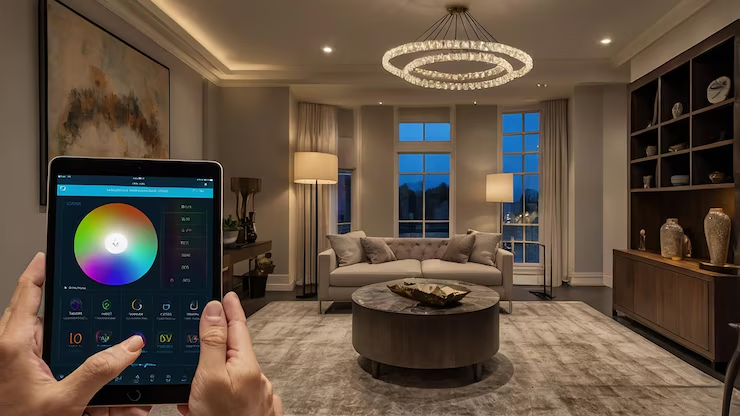
    Imagine this. You’ve had one of those days. The commute was a nightmare, your brain is fried, and all you want is to just collapse on your couch. You walk through your front door, drop your keys in the bowl, and just say, “Hey, I’m home.”

    Instantly, the entryway lights fade into a warm, welcoming glow. You hear the soft click of the thermostat as it kicks on, adjusting the temperature from energy-saving mode to your perfect degrees. In the living room, your favorite “chill after work” playlist starts to play softly from the speakers. This isn’t some far-off scene from a sci-fi movie. 

    This is the reality of the smart home, and it’s happening right now. In 2024, there are 69.91 million homes in America that use smart home devices. And more people are buying them every day because they’re getting cheaper and much easier to use.

    The mix of AI in smart homes and voice control is totally changing how we live at home. It started with just basic stuff like “turn on lights,” but now we have smart systems that really understand what we want and when we want it.

    The Smart Home Boom Is Real, and It’s Happening Now

    It feels like just yesterday that “smart devices” were a niche hobby for tech enthusiasts who loved to tinker. Now, you can’t walk through a Best Buy or browse Amazon without seeing them everywhere. And people are buying them. The number of people using voice assistants for smart homes in the US is going to go from 36.6% in 2022 to about 46.9% by 2025. That shows how fast Americans are getting into voice-controlled home automation.

    The reason is simple: it’s getting cheaper and way, way easier. The mix of AI in smart homes and intuitive voice control has completely changed the game. What started with complex apps and complicated setups is now as simple as talking. We’ve moved beyond basic commands into a world where our homes are starting to understand us.

    How AI Voice Assistants Work in Smart Homes

    The Future of Home Automation: AI + Voice Integration

    It’s easy to think of this tech as just… magic. You talk to a little speaker, and stuff happens. But what’s going on behind the scenes is a whole different ballgame, and it’s why companies are pouring an insane amount of money into it. 

    According to Market.us report, Voice AI in Smart Homes Market is projected to hit a mind-boggling $514.62 billion by 2034. That’s a compound annual growth rate of 44.8%. Early voice commands were like teaching a dog. You say “sit,” and it sits. You say “turn on lights,” and it turns on the lights. It only understands specific keywords. Modern AI home automation is like having a human personal assistant. 

    It uses something called Natural Language Processing (NLP) to figure out the context and what you actually mean, not just the words you said. It can even tell the difference between your voice, your spouse’s voice, and your kid’s voice, customized its response to whoever is talking.

    Cool AI Features That Are Changing Everything

    Okay, so we know it’s smart, but what does that mean for you day-to-day? This is where the “wow” factor comes in. The latest AI features are less about simple commands and more about creating an environment that feels like it’s perfectly in sync with your life.

    It Understands What You


    Modern AI voice systems have gotten incredibly good at parsing complex requests. They use advanced voice command technology that can deconstruct a whole string of thoughts. 

    For example, you can come in the door and say, “Hey Google, turn off all the lights except the one in the kitchen, set my work alarm for 7 AM, and can you remind me to take out the trash tomorrow morning?” 

    The AI doesn’t get confused. It processes each part of that sentence as a separate task and executes them all seamlessly. 

    It Learns Your Life and Predicts Your Needs

    This is probably the coolest, and slightly spooky, part of home automation using artificial intelligence. These systems are designed to learn. Machine learning algorithms are constantly and silently analyzing patterns. 

    For example, you might notice that every weekday around 9 PM, you dim the living room lights, lower the thermostat by two degrees, and turn on the TV. After a week or two of this, the system will start suggesting these actions for you. Eventually, it might just do them automatically, creating a “movie time” scene without you ever having to ask. 

    This predictive capability, fuelled by AI integration with sensors, your usage habits, and even external data like the weather, creates a home that adapts to you, not the other way around. It’s like having a butler who pays close attention.

    It Makes All Your Different Gadgets Play Nice
    One of the biggest headaches of early smart homes was getting devices from different companies to work together. AI is finally solving this. 

    The AI acts as the central conductor of this complex orchestra, understanding what each device can do and coordinating them to work together in perfect harmony.

    Benefits of Voice-Controlled AI Home Automation

    All this tech is impressive, but does it make life better? You bet. Let’s move from the theory to how people are using this stuff to solve real, everyday problems.

    • Saving Serious Energy (and Cash): Let’s be honest, we all want to lower our energy bills. AI home automation is a powerful tool for this. Instead of just setting a rigid schedule, a smart thermostat with voice control can make real-time, intelligent decisions. A study by the American Council for an Energy-Efficient Economy (ACEEE) found that smart thermostats can help homeowners save anywhere from 10% to 20% on heating and cooling costs.
    • Next-Level Security That’s Genuinely Smart: Home security systems have become incredibly sophisticated thanks to AI. The Grand View Research report estimates the smart home security market at around USD 33.94 billion in 2024, growing to USD 40.46 billion in 2025. It’s no longer just about alarms and sensors. Now, you can give nuanced commands. 
    • A Lifeline for Independence and Aging in Place: This might be the most impactful use of all. For elderly individuals or people with mobility issues, AI voice control is a life-changing technology. Simple tasks like getting up to turn off a light, adjust the thermostat, or find a TV remote can be difficult or even dangerous. Voice commands remove those physical barriers entirely.

    Leading Voice Assistant Platforms in AI-Powered Smart Homes

    The Future of Home Automation: AI + Voice Integration

    Three major players dominate the AI voice control landscape, each with a slightly different philosophy.

    • Amazon’s Alexa: Think of Amazon’s Alexa as the universal connector. Its biggest strength is its sheer size. The Alexa platform supports over 140,000 smart home devices from thousands of different manufacturers. If a smart device exists, it probably works with Alexa. Amazon’s focus is on creating a vast, open ecosystem where everything can connect.
    • Google Home: Google’s advantage is its brain. The Google Home automation system leverages the company’s unparalleled strength in AI and search. Google Assistant is exceptionally good at understanding natural, conversational language and answering complex questions. Its AI integration with your Google Calendar, Maps, and Gmail allows for some uniquely powerful predictive automations based on your actual life schedule.
    • Apple’s HomeKit: Apple’s approach can be summed up in one word: privacy. Apple’s HomeKit platform is built around smart home privacy features. It prioritizes processing commands locally on your devices (like an Apple TV or HomePod) instead of sending them to the cloud. This, combined with end-to-end encryption, appeals to users who are wary of their data being collected. The ecosystem is more of a “walled garden” and supports fewer devices, but the ones it does support work flawlessly and securely.

    Common Challenges With AI Voice-Controlled Home Devices

    It’s not all sunshine and perfectly brewed coffee. As with any new technology, there are bumps in the road. It’s important to go in with your eyes open.

    • Privacy and Data Security: This is the elephant in the room. The idea of an “always-listening” device in your home is unsettling for many. You have to trust the company behind your smart speaker. While companies are getting better with more transparent data policies and on-device processing, it’s still a valid concern. You’re making a trade-off between convenience and privacy.
    • Compatibility Headaches: While AI is helping devices play nice, it’s not a perfect world. You can still run into situations where your new smart lock doesn’t want to talk to your existing smart hub. Different wireless standards (like Zigbee, Z-Wave, and Wi-Fi) can sometimes cause frustrating compatibility issues.
    • The Accuracy Problem: We’ve all been there. You ask your assistant to do something, and they get it completely wrong. While accuracy has improved dramatically, things like strong accents, background noise, or just mumbling can still trip up the AI. A false activation in the middle of the night or a misunderstood command can be more frustrating than just flipping the switch yourself.

    The Future of AI Voice Control in Smart Home Technology

    The integration of AI and voice control in home automation is more than just a cool trend; it’s a fundamental shift in how we interact with our living spaces. The number of digital voice assistants in use is expected to double to 8.4 billion by 2024. That’s more assistants than there are people on the planet. A voice-controlled home is rapidly becoming the norm, not the exception.

    The future promises homes that don’t just respond but anticipate. Homes that understand context, learn our moods, and actively work to make our lives easier, safer, and more efficient. With costs falling and capabilities growing every single day, the question for homeowners is no longer if they should adopt AI-powered voice control but how quickly they want to embrace a smarter way of living. The revolution is just getting started.

  • My Smart Kitchen Journey: What Worked, What Didn’t

    My Smart Kitchen Journey: What Worked, What Didn’t

    Two years ago, I made a decision that has completely transformed my cooking experience – investing in a smart kitchen. My journey started with ambitious dreams of a fully automated kitchen that would make me cook like a professional chef. Some devices exceeded my expectations, while others left me questioning if I’d wasted my money.

    The smart kitchen gadgets market hit $5.3 billion in 2023 and will reach $14.4 billion by 2030. That’s a lot of money people are spending on connected kitchen tech, but here’s the truth: not every smart device is worth buying. After testing different smart cooking appliances for two years, here’s what worked and what were just expensive mistakes.

    This isn’t about fancy marketing. It’s about real testing and honest results from someone who tried everything in the modern kitchen setup trend.

    Smart Kitchen Devices That Actually Worked

    My Smart Kitchen Journey: What Worked, What Didn't

    After trying so many different gadgets, only a few really made my life easier. These saved me time and money. So shared them below: 

    Best Smart Refrigerator for Food Management

    The Samsung Family Hub became the star of my kitchen automation setup. This wasn’t just about having a big screen on the fridge – it solved real problems that cost money every month. The inside cameras work like watching devices for your food, letting you check what’s inside while shopping.

    Why did it work so well?

    • Inside cameras stopped me from buying the same things twice
    • Meal planning cuts food waste by 30%
    • Voice control made adding stuff to shopping lists super easy
    • The big screen became our family message center

    I saved about $80 every month just from not buying duplicate items and wasting less food. That’s almost $1,000 per year – so the fridge paid for itself!

    Smart Oven That Made Me a Better Cook

    The Breville Smart Oven changed my cooking results completely. The built-in temperature thing and app connection meant I could watch roasts and bakes from anywhere in the house. Unlike some smart kitchen devices that make simple tasks harder, this one actually helped.

    What made it worth it:

    • The temperature probe meant no more guessing if the meat was done
    • App alerts stopped me from burning food
    • 20% more better energy-efficient kitchen appliances than regular ovens
    • Multiple rack spots with smart heating cook food more evenly

    Going from being scared about expensive meat cuts to making perfect roasts every time – that’s the kind of improvement that’s worth the money.

    Voice Assistant for Hands-Free Cooking Control

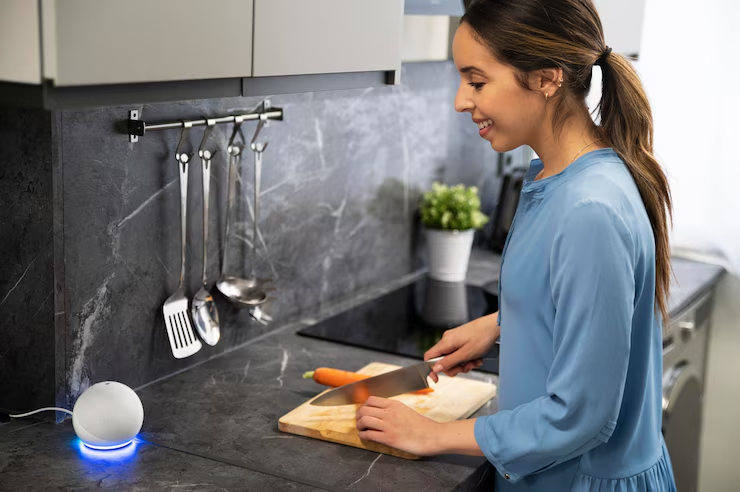
    Alexa, working with voice-controlled kitchen tools made cooking hands-free in ways I didn’t expect to be so useful. When cooking with messy hands, voice control lets me set timers, convert measurements, change temperatures, and add items to shopping lists.

    When your hands are covered in flour or raw meat, voice-controlled kitchen tools become must-haves, not just nice to have. This was probably the best part of my smart home kitchen ideas setup.

    Overrated Smart Kitchen Appliances That Wasted My Money

    Not everything I bought was worth it. Some gadgets just made cooking more complicated and didn’t solve any real problems.

    Smart Coffee Maker Review: Overpriced & Overcomplicated

    The $400 smart coffee maker was supposed to learn what I like and brew perfect coffee every morning using cooking with AI. Instead, it became a daily headache. The app was slow, the WiFi connection was unreliable, and the coffee wasn’t better than a $50 regular machine.

    Why was it terrible?

    • The app crashed all the time during the morning rush
    • WiFi problems meant remote brewing didn’t work
    • Too many complicated settings made simple coffee brewing a pain
    • Way too much maintenance for barely any benefit

    After six months, I went back to a simple programmable coffee maker and all problems were solved.

    Why Smart Dishwashers Don’t Add Real Value

    The smart dishwasher with app connection seemed like a good idea until I realized dishwashing doesn’t need monitoring. The cycle notifications were annoying instead of helpful, and the “smart load detection” rarely worked as they said.

    Reality check:

    • Dishwashing doesn’t need remote watching
    • App notifications became just digital noise
    • Smart features added problems without real benefits
    • Regular dishwashers do the job just as good

    This taught me an important lesson – not every appliance needs to be “smart.” Some tasks are better kept simple.

    Hidden Costs of a Smart Home Kitchen

    Nobody tells you about all the extra stuff you need to buy to make these things work right. Here’s what I learned the hard way about the real costs.

    Smart Kitchen Compatibility Issues Between Devices

    Different brands used different apps, and getting everything to work together needed technical troubleshooting that took away from cooking time. Getting all the best smart kitchen devices to work together was harder than expected.

    Real costs included:

    • Multiple app subscriptions for different appliances
    • WiFi network upgrades to handle more devices
    • Time spent fixing connection issues
    • Frustration with systems that don’t work together

    The Smart Kitchen Learning Curve No One Talks About

    Every smart cooking appliance comes with a learning curve that regular appliances don’t have. I spent hours reading manuals, watching YouTube videos, and trying different settings. While some devices paid off this time investment, others never did.

    What to expect:

    • Budget extra time for setup and learning
    • Some smart features need regular use to be worth the complexity
    • Simple tasks shouldn’t need smartphone interaction
    • User interface design is different between manufacturers

    What to Know Before Buying Smart Cooking Appliances

    My Smart Kitchen Journey: What Worked, What Didn't

    Here’s what I wish I knew before spending thousands on smart kitchen gadgets. These tips will save you money and headaches.

    How to Choose Smart Kitchen Gadgets That Solve Real Problems

    The most successful smart kitchen gadget investments solved real problems in my cooking routine. The refrigerator reduced food waste, the oven improved consistency, and voice control made hands-free operation better. Devices that just added connectivity without solving problems became expensive paperweights.

    Top Questions to Ask Before Buying Smart Kitchen Tech

    • What specific problem does this solve?
    • Will I use the smart features regularly?
    • Does the basic function work well without smart features?
    • How much time will setup and learning take?

    The 80/20 Rule of Smart Kitchen Investment

    After lots of testing, 80% of the benefit came from 20% of the features. Most smart cooking appliances have dozens of functions, but only a few get regular use. Focus on devices where those few functions actually improve cooking.

    High-Impact Smart Features That Are Actually Worth It:

    • Inside cameras for refrigerators
    • Temperature probes for ovens
    • Voice control for hands-free operation
    • Automated inventory tracking

    Low-Impact Features That Just Add Complexity:

    • Social media integration
    • Too many app notifications
    • Overly complex scheduling systems
    • Unnecessary remote monitoring

    Smart Kitchen Cost Breakdown: What I Spent vs. What I Saved

    Let me break down the real costs and savings so you can see if this journey is worth it for your budget.

    Despite the smart kitchen market growth, adoption challenges are still big. The high starting cost is a main barrier, which I experienced firsthand.

    Actual costs after 2 years:

    • Smart kitchen gadgets: $3,200 total investment
    • Subscription services: $180 per year
    • WiFi upgrades: $150
    • Replacement/returned items: $400

    Real benefits:

    • Reduced grocery spending: $80/month
    • Energy savings: $25/month
    • Time savings: 2 hours/week
    • Better cooking success rate: 90% vs 70% before

    Final Thoughts: How to Build a Smart Kitchen That Works for You

    My Smart Kitchen Journey: What Worked, What Didn't

    After two years of trial and error, here’s my honest advice on building a modern kitchen setup that actually works.

    This smart kitchen journey showed that success is about strategic selection, not buying everything. Devices that fit easily into existing routines while solving real problems were worth their cost. Those that added complexity without clear benefit became expensive lessons.

    Tips for Starting Small with Smart Kitchen Tools:

    • Start with one smart kitchen device and expand slowly
    • Focus on problem-solving over cool features
    • Research user reviews focusing on long-term experience
    • Consider total cost including subscriptions

    Best Smart Kitchen Devices to Buy First:

    • Smart refrigerator for inventory management
    • Smart oven for cooking precision
    • Voice assistant for hands-free control
    • Skip smart versions of simple appliances

    The connected kitchen tech market is expected to reach $21.80 billion in 2025, driven by consumers wanting kitchen efficiency. But remember – the smartest kitchen is one that makes life easier, not more complicated.

    Before jumping into a modern kitchen setup transformation, honestly look at your cooking habits and identify real pain points. Not every appliance needs to be smart, but the best smart kitchen devices can really transform your cooking experience. Choose wisely, and your kitchen will become a more efficient, enjoyable space for years to come.

  • The Future of Interiors: Trends You’ll Love

    The Future of Interiors: Trends You’ll Love

    The interior design business is doing really well in the Gen Z era. It was worth $180.73 billion in 2023, and experts think it’ll hit $317.87 billion by 2030. That’s huge growth! But why is everyone suddenly caring about home decor so much?

    People are just tired of boring, cookie-cutter houses. They want living room decor ideas that look amazing but don’t cost a fortune. And honestly, who doesn’t want that?

    From smart storage to modern living room decor ideas, people are now more interested in home design trends than ever before. Even small changes like wall paint colors or sofa choices can make a big difference in how your home feels.

    This article will explore interior design trends you’ll love, whether you live in a flat, villa, or a small studio. If you’re looking for budget home makeover ideas or want to know what’s new in the world of interior design, you’re in the right place.

    Why Sustainable Materials in Interior Design Are Here to Stay

    The biggest change in modern home decor is that everyone wants eco-friendly stuff. This isn’t just some trend that’ll disappear next year – it’s becoming the normal way to do things when you’re planning a living room transformation.

    People want materials that look good AND don’t hurt the planet. Makes sense, right?

    Top Picks for Eco-Friendly Home Decor in 2025

    • Bamboo flooring is gaining popularity because it regrows in just 3-5 years, compared to 20-30 years for regular wood. It’s perfect for affordable room decor because it costs way less than hardwood but lasts just as long.
    • Cork is making a comeback, too. It naturally fights germs and fire, plus it’s great for keeping your house warm or cool. 
    • Hemp textiles are replacing those synthetic fabrics in curtains and furniture covers, which is awesome news if you have allergies.

    Recycled Materials Create Unique Home Decor Pieces

    People are turning old barn wood into dining tables and accent walls. Recycled glass becomes light fixtures and pretty decorative stuff. Each piece has a character that brand new materials just can’t match.

    Reclaimed wood isn’t just trendy – it’s actually better quality than new lumber lots of times. The grain patterns are way more interesting, and it’s already proven it can last for decades.

    How Smart Home Design Is Changing the Way We Live

    Smart home technology is finally becoming easy to use. Instead of complicated systems that need an engineering degree to figure out, new tech is designed to just work without you having to think about it.

    Modern smart homes learn what you do. Your lights dim by themselves when you start watching TV. The temperature changes when you’re driving home. This tech is changing how we think about living room layout and how to arrange furniture.

    Must-Have Smart Gadgets for Modern Homes

    Air quality monitors are becoming standard in homes now. These systems track bad stuff in the air and humidity, then automatically fix the ventilation. Some even connect to your health apps to make the air quality perfect for your specific needs.

    Smart glass windows can tint themselves based on sunlight, reducing glare and heat while keeping natural light. This is really helpful in home offices where screen glare is always a problem.

    Bringing Nature Inside Your Home

    The Future of Interiors: Trends You’ll Love

    The connection between humans and nature is driving one of the strongest interior design trends. The demand for residential interior design services is expected to grow from USD 145.01 billion in 2025 to USD 186.22 billion by 2030, showing a CAGR of 5.13%. The growth is mostly because people want comfortable, functional spaces that feel natural.

    Biophilic design is more than just adding some plants. It’s about creating environments that actually feel like nature. Living walls are becoming part of the architecture, not just decorations.

    Tricks to Maximize Natural Light in Small Rooms

    Using mirrors and shiny surfaces to get more natural light is a key interior design tip. Skylights are being added to weird spaces like closets and bathrooms. Light tubes bring natural light to rooms that don’t have windows.

    Circadian lighting systems change color temperature all day long. Cool blue light in the morning switches to warm amber tones at night, which helps with sleep patterns.

    Calm Space with Indoor Plants and Green Decor

    Kitchen herb gardens are turning into hydroponic systems built right into cabinets. Living room plant walls work as air purifiers. Bathroom plants love humidity-controlled environments.

    This trend goes to furniture choices too. Live-edge wood tables and stone countertops create real connections to nature in your cozy living spaces.

    The Balance Between Minimalist and Maximalist Decor

    The future of modern home decor is finding balance between having too much stuff and having too little. It’s not about picking sides – it’s about being smart with your choices.

    This approach means having less items overall, but each piece makes a statement. A minimalist room might have one dramatic piece of art or a stunning light fixture that becomes the main focus.

    How to Style Personalized Home Decor Collections

    Instead of filling shelves with random stuff, people are creating displays on purpose. Travel souvenirs tell stories. Book collections show what you’re interested in. Each item has purpose and meaning.

    Color palettes are getting more sophisticated. Neutral bases get accented with bold, personal choices. A white and beige room might have a single emerald green velvet sofa or vibrant artwork.

    Smart Furniture Ideas for Flexible Room Layouts

    Furniture that does multiple things is essential. Ottoman storage units, expandable dining tables, and modular seating adapt to different needs. The goal is maximum impact with minimum clutter in your living room layout.

    How to Use Color Psychology in Home Design for Wellness

    The Future of Interiors: Trends You’ll Love

    Total energy use and CO2 from buildings went above pre-pandemic levels globally, with emissions hitting an all-time high of around 10 billion tons of CO2. This environmental concern is driving color choices that help both wellness and energy efficiency.

    Color psychology is becoming more scientific in interior design. Cool blues and greens reduce stress and help you focus, making them perfect for home offices. Warm earth tones create welcoming environments in living spaces.

    Cool Ways to Add Mood-Boosting Features to Your Home

    Paint companies are developing new formulas that respond to environmental conditions. Some paints change slightly with temperature or humidity. Others have natural minerals that help clean the air.

    Different textures in the same color family creates visual interest without overwhelming your senses. Matte and glossy finishes of the same shade can define different areas in open floor plans.

    The Beginner’s Guide to DIY Home Styling

    DIY home styling is becoming way more accessible thanks to better tools and online resources. People are learning to avoid common home styling mistakes through video tutorials and step-by-step guides.

    The key to successful DIY home styling is starting small. Pick one wall to paint or one corner to reorganize. Master the basics before taking on bigger projects.

    Common Interior Design Mistakes to Avoid

    One of the biggest home styling mistakes is not measuring spaces before buying furniture. Another is choosing paint colors without testing them in different lighting conditions.

    Poor furniture arrangement can make even the most expensive pieces look cheap. The rule of thumb is to create conversation areas and make sure traffic flow isn’t blocked.

    Affordable Room Decor That Doesn’t Look Cheap

    Affordable room decor doesn’t mean cheap-looking. It means being smart about where you spend money and where you can save.

    The 80/20 rule works well here. Spend 80% of your budget on key pieces like sofas and dining tables. Use the remaining 20% for accessories and decorative items.

    Budget Home Decor Tips That Actually Work

    Thrift stores and estate sales are goldmines for unique pieces. A $20 side table can look like a $200 piece with the right styling around it.

    Living room decor ideas on a budget include rearranging existing furniture, adding plants, and changing out throw pillows and curtains. These small changes can create a completely different feel.

    Growth in the Interior Design Industry

    The Future of Interiors: Trends You’ll Love
    Group of architects working on 3D printed models of buildings. Architecture and design

    The Interior Design Services Market size is expected to reach $145.01 billion in 2025 and grow at 5.13% to reach $186.22 billion by 2030. This growth is driven by homeowners increasingly willing to invest in quality, sustainable design.

    Professional interior designers are reporting higher demand for consultation services. The complexity of modern design choices makes professional help more valuable than ever.

    How to Make Interior Trends Work for Your Own Home

    The interior design trends we’re seeing aren’t just about style – they’re about creating homes that support health, respect the environment, and adapt to changing needs. From sustainable materials to smart technology, these trends offer practical solutions for modern living.

    Whether you’re planning a complete living room transformation or just updating a single room, these trends offer tons of ways to create spaces that are beautiful, functional, and responsible. Your home can reflect who you are while also being a force for positive change.The future of interiors is here, and it’s more exciting than ever. Start with one small change and build from there. Your perfect cozy living space is waiting for you.

  • Living Room Styling Basics: Do’s and Don’ts

    Living Room Styling Basics: Do’s and Don’ts

    Did you know that all-white, cookie-cutter living rooms are trending out according to interior designers? The reality is that 50% of homeowners spend most of their time in the living room, making it the most important space to get right. But many people make the same home styling mistakes that can ruin their whole house vibe.

    The living room is basically where everything happens – morning coffee, Netflix binges, birthday parties, you name it. But figuring out living room decor ideas can feel pretty overwhelming with all the different advice out there.

    This guide breaks down the main do’s and don’ts of living room styling, with real expert tips and what’s trending right now. Whether you’re starting fresh or just want some affordable room decor ideas, these interior design tips will help you make a room that looks good and actually works for your life.

    Understanding Your Space: Getting the Basics Right

    Before you go crazy buying furniture and stuff, you should understand your space first. Any living room transformation starts here. One of the most common interior design mistakes we see is the wrong scale. This happens when people don’t really think about their room size and how things fit together.

    Your living room’s size, shape, and how much natural light it gets will decide everything from your living room layout to what colors you pick. A big mistake people make is trying to copy some magazine room without thinking if it’ll actually work in their space.

    Do’s for Planning Your Space:

    • Measure everything twice – Before buying anything, measure your room, doorways, windows, all of it. Draw a simple floor plan on paper or use free apps for DIY home styling.
    • Think about how people walk through – Leave at least 36 inches of space around your main furniture so people can walk without bumping into stuff.
    • Figure out what you actually do in there – Is this where you watch TV with the family or is it more for when guests come over? Your choices should match how you really use the room.

    Don’ts for Planning Your Space:

    • Don’t stick all furniture against the walls – A common design mistake we see all the time is putting all the furniture along the walls, which leaves the middle of the room empty and weird. This actually makes rooms feel smaller and less cozy.
    • Don’t ignore what’s already there – Work with stuff like fireplaces, built-in shelves, or big windows instead of trying to hide them.
    • Don’t buy furniture before you plan – Lots of people fall in love with a couch or table before they know what fits. Then they end up with stuff that doesn’t work.

    Tips for Choosing the Right Furniture for a Home

    Furniture arrangement is where most living room decor ideas either work great or fall apart. Curved furniture, especially sofas and armchairs, will be popular in 2025 – bringing a welcome softness to living spaces, interior design experts say.

    The trick is mixing comfort, style, and making sure everything actually works. Your furniture arrangement guide should focus on making cozy living spaces that feel put-together but still work for everyday life.

    Do’s for Picking Furniture:

    • Spend money on the important stuff – Start with a good couch, coffee table, and lights. These are the main pieces that everything else works around for modern home decor.
    • Mix up heights and shapes – Put tall bookshelves with low side tables, round coffee tables with square couches. This makes things more interesting to look at.
    • Pick one main thing to focus on – Every living room needs something that catches your eye first, like a fireplace, big artwork, or a really cool piece of furniture.
    • Think about size – Big rooms can handle bigger furniture, smaller rooms need smaller stuff for affordable room decor.

    Don’ts for Picking Furniture:

    • Don’t buy matching sets – This makes your room look like a furniture store. Mix different styles and time periods to make it more interesting.
    • Don’t pick style over comfort – Your couch might look amazing, but if it’s uncomfortable, you won’t want to hang out in there.
    • Don’t cram too much in – Sometimes less is better for living room layout. Give your furniture some breathing room.

    Colors and How They Make You Feel

    Living Room Styling Basics: Do's and Don'ts

    Color choices can totally make or break your living room decor ideas. Colors change how you feel, how big your room looks, and the whole vibe. Expect jewel tones paired with natural textures to be big in 2025, design experts say.

    Understanding how colors work helps you create the right feeling. Warm colors like reds and oranges make things feel energetic and cozy, while cool colors like blues and greens are more calm and relaxing.

    Do’s for Picking Colors:

    • Start with neutral colors – Use neutral colors (beige, gray, white) as your base, then add personality with accent colors through pillows, art, and accessories for modern home decor.
    • Use the 60-30-10 ruleUse your main color for 60% of the room, a second color for 30%, and a bold accent color for 10%.
    • Test colors in different light – Colors look different in natural light versus lamp light. Test paint samples and fabric pieces in your actual room.

    Don’ts for Picking Colors:

    • Don’t use too many colors – Stick to 3-4 colors max, or it’ll look crazy. More colors don’t mean better style.
    • Don’t ignore undertones – Every color has undertones (warm or cool). Make sure your colors work together.
    • Don’t just follow trends – Jewel tones might be trendy, but pick colors you actually like and can live with for years.

    Lighting: Making Everything Look Good

    Lighting design gets ignored a lot but it’s super important for making cozy living spaces. Bad lighting can ruin even the best furniture and colors. Most living rooms need different kinds of lights to work right all day.

    Good lighting mixes general lighting (for the whole room), task lighting (for specific stuff), and accent lighting (for decoration). This makes everything look better and lets you change the mood.

    Do’s for Lighting:

    • Use different types of lights – Use overhead lights for general light, table lamps for reading, and accent lights to show off art or cool features.
    • Get dimmer switches – This lets you change how bright things are for different moods and times.
    • Use lots of light sources – Don’t just rely on one overhead light. Put lights around the room for even lighting.

    Don’ts for Lighting:

    • Don’t only use overhead lights – This makes harsh shadows and doesn’t feel welcoming.
    • Don’t put lamps too high or low – Art hung too high is a common design mistake in living rooms. Try to put the center of your art at eye level, around 56″-60″ from the floor. The same principle applies to where you place lights.
    • Don’t ignore lamp shade size – The shade should fit with the lamp base and the furniture it sits on.

    Adding Accessories Without Going Overboard

    Accessories and decor are where you can really show your personality, but this is also where lots of people mess up. The key is finding the right balance between showing your style and not making things look crazy for affordable room decor.

    Think maximalism, organic shapes, and bold statements are trending for 2025, but this doesn’t mean filling your space with random stuff.

    Do’s for Accessories:

    • Group things in odd numbers – Put accessories in groups of 3 or 5 because it looks better.
    • Mix different heights and textures – Use different materials like wood, metal, glass, and fabric to make things interesting.
    • Leave some empty space – Not every surface needs stuff on it. Empty space gives your eyes a break.

    Don’ts for Accessories:

    • Don’t fill every surface – This makes everything look messy and makes cleaning hard.
    • Don’t buy stuff just to fill space – Quality is better than quantity in interior design tips.
    • Don’t ignore size – Small accessories get lost in big rooms, while huge pieces can take over small spaces.

    Common Mistakes People Make While Styling a Room 

    Tips for Choosing the Right Furniture for a Home

    Learning from other people’s home styling mistakes can save you time and money. “One of the biggest mistakes I see is rugs that are too small for a room,” designer Gideon Mendelson says. This is just one of many common errors that can mess up your living room transformation.

    Knowing these common mistakes helps you make better choices from the start. Most styling errors happen when people rush or don’t know basic design stuff.

    The Biggest Don’ts:

    • Don’t pick the wrong rug size – Your rug should be big enough that at least the front legs of your furniture sit on it. A too-small rug makes the room feel disconnected.
    • Don’t ignore coffee table spacing – Leave 12-18 inches between your coffee table and seating so people can move around.
    • Don’t hang art too high – Like we said before, art should be at eye level, not way up high.
    • Don’t forget about storage – Pretty rooms still need places to put stuff. Think about this from the beginning.

    Making It Your Own Style

    Living room styling is part art, part science. You need to understand design rules while staying true to your style and what you need. The key is finding the right balance between current trends and stuff that won’t go out of style for modern home decor.

    Your living room should show your personality and how you live, not just follow trends. In 2024, dreamy futuristic decor schemes will take a more prominent spot in interiors, but you don’t have to do every trend.

    The best living room decor ideas mix current design rules with personal touches that make the space feel like you. This makes a room that feels both stylish and real.

    Final Tips

    Did you know that all-white, cookie-cutter living rooms are trending out according to interior designers? The reality is that 50% of homeowners spend most of their time in the living room, making it the most important space to get right. But many people make the same home styling mistakes that can ruin their whole house vibe.

    The living room is basically where everything happens – morning coffee, Netflix binges, birthday parties, you name it. But figuring out living room decor ideas can feel pretty overwhelming with all the different advice out there.

    This guide breaks down the main do’s and don’ts of living room styling, with real expert tips and what’s trending right now. Whether you’re starting fresh or just want some affordable room decor ideas, these interior design tips will help you make a room that looks good and actually works for your life.