When sales for a style of furniture jump 34% in just one year and a new report shows that nearly half of all interior designers (47%) are calling it the biggest trend for 2025, you know it’s something to pay attention to. We’re talking about curved furniture, and the stats prove that Americans are officially obsessed.
This isn’t just about a few round coffee tables. It’s a massive shift away from the sharp, boxy look that dominated our homes for decades. Americans are now actively choosing soft-edge furniture and organic-shaped furniture for their living rooms, bedrooms, and even home offices.
But why is everyone suddenly dropping their old square tables for round-edge furniture? The answer is bigger than just style.
The Science Behind Why We Love Curves
Our brains are wired to like organic-shaped furniture better than sharp, angular pieces. It’s not just personal taste; there’s real science behind this preference.
Research from the University of Toronto tracked 200 people for six months and found something pretty amazing. People in rooms with curved home decor had 15% lower stress levels than those surrounded by sharp-edged furniture. Their cortisol (stress hormone) levels dropped significantly when they spent time in spaces with round-edge furniture.
Here’s what happens when you add curved furniture to your home:
- Better flow: No more bumping into sharp corners when you’re walking around
- More conversation: Living room curved couch setups naturally bring people together.
- Safer for kids: Soft edges mean fewer accidents and injuries
- Calmer feeling: Curves make any room feel more relaxing and welcoming.
This makes sense from an evolutionary standpoint too. In nature, dangerous things usually have sharp edges (think thorns, cliffs, predators), while safe, nurturing things are curved (water, clouds, smooth stones). Our subconscious picks up on these cues and relaxes around curves.
Also Read: Is a Smart Home Right for You? Pros & Cons to Know
Furniture Trends 2025: The Numbers Don’t Lie
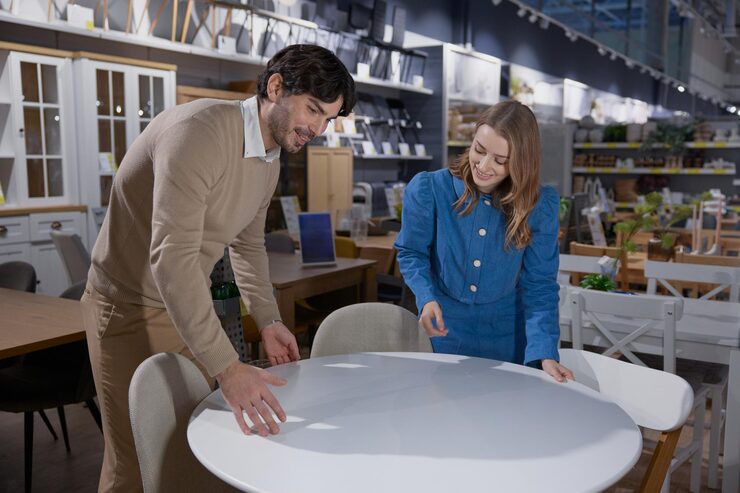
The curved furniture market is growing right now. The global furniture industry was worth $568.60 billion in 2024 and is expected to hit $878.14 billion by 2032. A big chunk of this growth is coming from curved interior design pieces.
Key statistics that show this trend is real:
- Premium pricing: Curved furniture typically costs 20-30% more than regular angular pieces, but people are still buying it because of the luxury lifestyle it offers.
- Online boom: E-commerce sales of round-edge furniture grew 34% in 2024.
- Millennial preference: 68% of millennial homeowners prefer soft-edge furniture over traditional square designs
- Business adoption: Hotels and restaurants using curved home decor report 18% better customer satisfaction.
The online home decor market grew 11.8% between 2023 and 2024, with projections showing 12.24% annual growth, according to Halmon Thompson. Much of this is driven by younger Americans who want organic-shaped furniture in their homes.
Modern Curved Sofa and Other Popular Pieces
Interior design trends 2025 isn’t just about one type of furniture. Americans are loving the curves throughout their entire homes.
- Living room pieces are leading the way. The modern curved sofa has become the new must-have item, replacing traditional L-shaped sectionals. These sofas create natural conversation areas and can actually seat more people in less space. A living room curved couch that seats 8 people comfortably takes up the same floor space as a regular sectional that only seats 6.
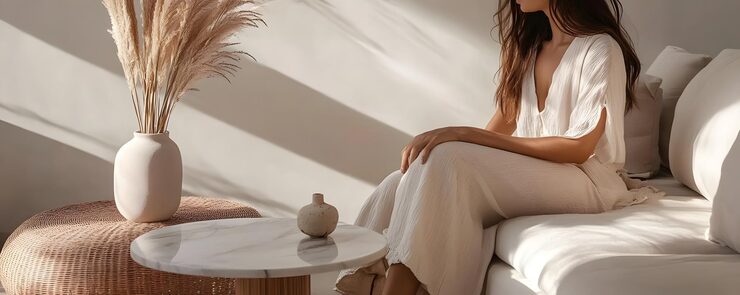
- Round coffee tables are pairing perfectly with curved seating. They eliminate that harsh rectangle-on-rectangle look that dominated living rooms for years. Plus, they’re safer; no sharp corners to bump into during late-night trips to the kitchen.
- Dining room furniture is also getting the curve treatment. Oval dining tables and curved banquettes are becoming super popular, especially in open-concept homes where visual flow matters. These pieces make dinner feel more intimate and work better in spaces where the dining room connects to other areas.
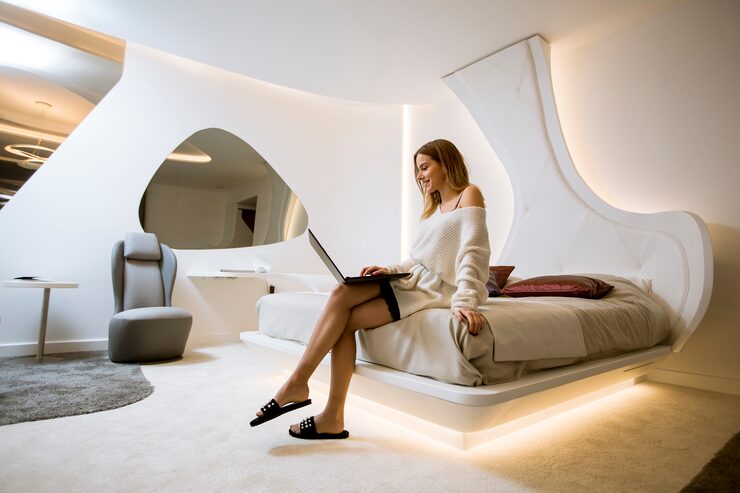
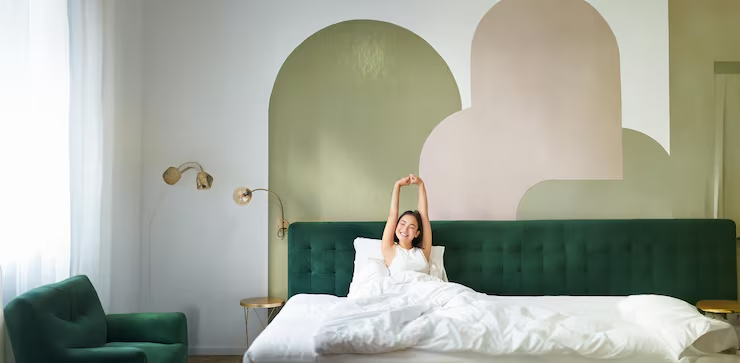
- Bedroom furniture with curves includes rounded nightstands, curved headboards, and soft upholstered benches. It helps create a more restful environment that actually promotes better sleep.
Even home office furniture is going curved. With remote work becoming permanent for many Americans, curved desks and ergonomic chairs with soft-edge furniture design are gaining popularity.
Why Curved Furniture Actually Works Better
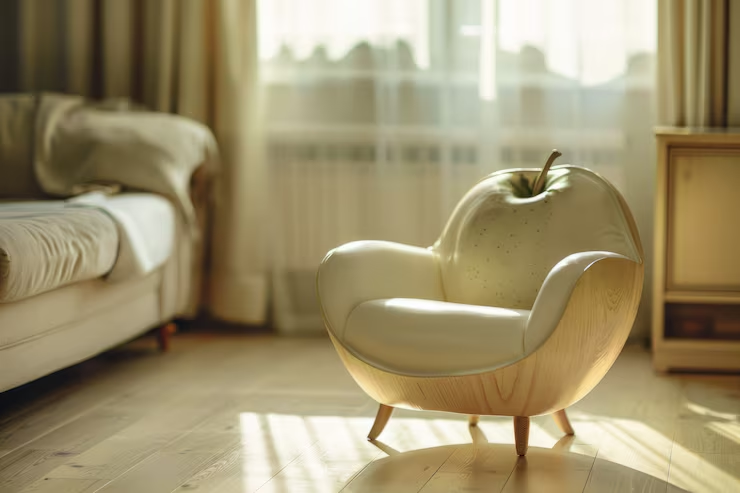
Beyond looking good, curved interior design offers real practical benefits that traditional angular furniture can’t match.
Space efficiency is probably the biggest advantage. Round-edge furniture can fit more people in smaller spaces. A curved dining table seats more guests than a rectangular one of the same size. A living room curved couch maximizes seating while taking up less visual space.
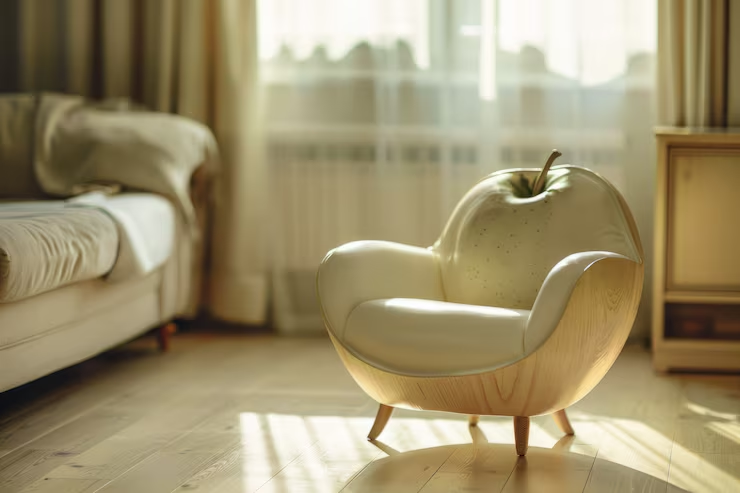
Flexibility in placement gives homeowners way more options. Unlike square furniture that has to align with walls and corners, curved furniture works anywhere in a room. You can put a curved accent chair in a corner, by a window, or floating in the middle of the room – it looks good everywhere.
Timeless appeal makes organic-shaped furniture a smart investment. While ultra-modern angular designs can look dated quickly, curves have staying power. A well-made curved wooden dining table will still look stylish years from now, even as furniture trends in 2025 evolve into something new.
How Manufacturing Makes Curved Furniture Affordable
Modern technology has made curved home decor way more affordable than it used to be. What once required expensive handcrafting can now be mass-produced without losing quality.
Steam-bending technology lets manufacturers create smooth curves in solid wood without weakening the structure. 3D printing and CNC machines can cut precise curved components that would’ve been impossible to make cost-effectively just ten years ago.
These advances mean:
- Every piece matches exact specifications.
- Less material waste during production
- Complex curved designs that used to require handwork
- More sustainable manufacturing processes
New materials also support the curved furniture trend. Composite materials bend easier while staying strong, and better adhesives create seamless curved pieces that look as good as solid wood.
Adding Curved Interior Design to Your Home
You don’t need to replace everything to follow the interior design trends 2025. Smart integration can transform your space gradually.
Start with one big piece like a modern curved sofa or round dining table. This gives your room a new focal point without overwhelming your existing decor. Place it where you can see it from multiple angles; curves look different depending on where you’re standing.
Add smaller curved elements through accessories. Curved mirrors, round side tables, and soft ottomans support your main curved furniture while adding functionality.
Balance is key; you still need some straight lines to keep the room from feeling too soft or unstable. A few angular elements provide visual anchors.
Think about traffic flow when placing round-edge furniture. These pieces should help people move through your space more easily, not block pathways.
Styling Soft-Edge Furniture Right
Curved furniture needs different styling than traditional pieces. The key is working with the natural flow instead of fighting it.
Create rhythm by repeating curved shapes throughout your space. If you have a living room curved couch, add curved wall art, round lamps, or circular rugs. This repetition looks intentional, not accidental.
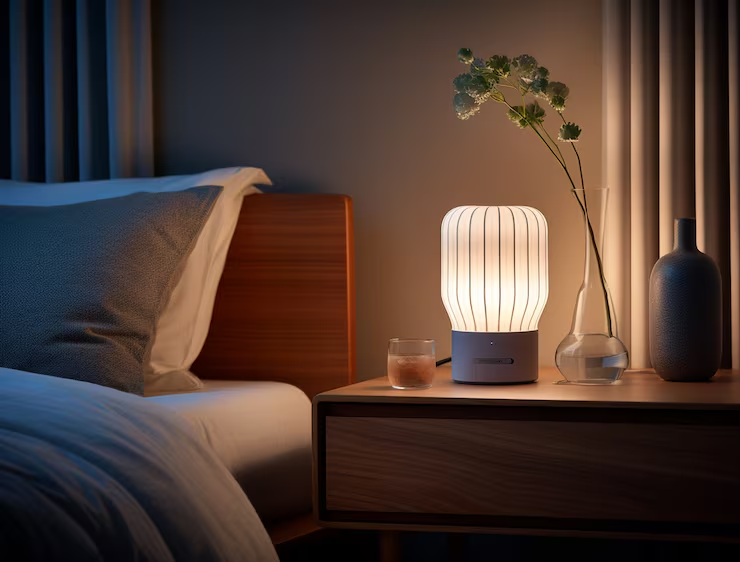
Lighting matters with organic-shaped furniture. Use soft, diffused lighting that follows the furniture’s contours. Harsh directional lighting creates shadows that work against the soft aesthetic.
Choose materials carefully. Smooth fabrics like cotton blends and brushed metals complement curved forms. Avoid overly textured materials that compete with the furniture’s smooth lines.
Size correctly;oversized curved home decor can dominate a room, while pieces that are too small get lost. Measure your space and consider how the curves will look in your specific room dimensions.
What’s Next for Furniture Trends in 2025?
The curved furniture trend shows no signs of slowing down. If anything, it’s evolving to include new materials and smart technology.
Future developments will likely include:
- Smart features: This smart looking furniture with built-in charging stations and technology
- Eco-friendly materials: Bio-based composites that bend easily while being better for the environment
- Modular designs: Round-edge furniture that reconfigures for different spaces and needs
- Mass customization: 3D printing is making personalized curved interior design affordable for regular homeowners.
The Bottom Line
Curved furniture isn’t just another design; it is a response to how Americans want to live right now. As our homes serve more functions and our lives get more stressful, the psychological comfort of organic-shaped furniture becomes more valuable.
The numbers prove it: interior design in furniture is dominated by curves and this trend is only getting stronger. Whether you’re planning a complete redesign or just want to soften your current space, soft-edge furniture offers both style and practical benefits that match how we want to live today.
The real question isn’t whether curved home decor will keep growing—it’s how soon you’ll experience the comfort and style that only curves can provide.
Frequently Asked Questions:
1. What is it about bent furniture that’s becoming so popular in the world of interior design?
It also enhances better circulation of energy, safety and health, as curves represent natural and nurturing shapes.
2. If I go curved instead of traditional all square furniture, what’s in it for me?
Curves add ambience to social situations – you are around them and they enable more open discussions. It is ergonomic, supportive and it adds a touch of safety especially in homes with children offering a timeless look.
3. How do I introduce curved furniture into my home without doing a complete overhaul?
Introducing curves into straight designs adds balance, and decision to place a design should be based on traffic flow as well the size of the room.
4. Do curved furniture cost more than standard designs?
Prices do fluctuate, and there are budget-friendly options, particularly for accent pieces such as side tables and chairs.