Category: DIY Home Projects

  • Smart Home Hacks: Build Your Own Tech-Friendly Space

    Smart Home Hacks: Build Your Own Tech-Friendly Space

    The global smart home market was valued at $127.80 billion in 2024, and experts predict it’ll reach $162.78 billion by 2025. That’s a massive jump, showing how Americans are getting serious about home automation. But here’s the thing – you don’t need to spend thousands to get started with smart home hacks.

    About 69.91 million US households are already using smart devices, and that number keeps growing. The DIY smart home trend is taking off because people realize they can build their own tech setup without hiring expensive installers or buying premium systems.

    Voice-controlled devices and IoT devices for the home are becoming cheaper and easier to install. Revenue in the smart home market is projected to reach US$174.0bn in 2025, with an annual growth rate of 9.55%. This means more options and better prices for homeowners who want to upgrade their spaces.

    What Makes a Home “Smart” in 2025?

    A smart home isn’t just about having gadgets everywhere. It’s about creating a system where your devices talk to each other and make life easier. Think of it like having a helpful assistant that never sleeps and always remembers your preferences.

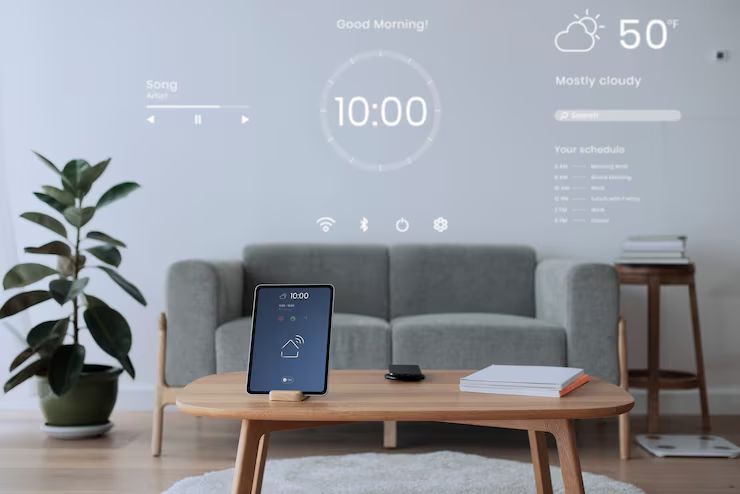
    The best smart gadgets of 2025 include devices that actually solve problems. We’re talking about lights that turn on when you walk in, thermostats that adjust temperature based on your schedule, and security cameras that send alerts to your phone. These aren’t luxury items anymore; they’re practical tools.

    Modern IoT devices for the home work together in what experts call an ecosystem. Your smart doorbell can trigger your voice-activated lights to turn on when someone approaches. Your smart thermostat can work with your security system to save energy when nobody’s home.

    The key difference between a real smart home and just having random gadgets is integration. Everything should work together smoothly, not require separate apps for every single device.

    Essential Smart Home Devices for Beginners

    Smart Home Hacks: Build Your Own Tech-Friendly Space

    Starting your budget smart home journey doesn’t mean buying everything at once. The smart approach is to pick devices that fix your biggest daily annoyances first.

    Smart Thermostats

    A smart thermostat is usually the first device experts recommend because it pays for itself through energy savings. These devices learn when you’re home, adjust temperatures automatically, and can be controlled from anywhere. Most homeowners save 10-15% on heating and cooling costs.

    Popular options include the Nest Learning Thermostat ($249) and Ecobee SmartThermostat ($199). Both work with major voice-controlled devices and give you detailed reports about your energy usage.

    Smart Plugs

    Smart plug uses are endless, and they’re perfect for beginners. For $10-15 each, you can make any regular device “smart.” Plug your coffee maker, lamps, fans, or space heaters into these devices to control them with your phone or voice commands.

    You can set schedules so your coffee starts brewing before you wake up, or turn off all electronics when you leave for work. Smart plugs are probably the easiest way to dip your toes into home automation.

    Voice-Activated Lights

    Voice-activated lights have come a long way from basic on/off switches. Modern smart bulbs can dim, change colors, and work with schedules. You can create scenes like “Movie Night” that dims all lights to 20% or “Good Morning” that gradually brightens your bedroom.

    Brands like Philips Hue are premium options, while Wyze and Sengled offer budget smart home alternatives starting around $10 per bulb. The real magic happens when you connect them to voice-controlled devices like Alexa or Google Assistant.

    DIY Smart Home Setup: Room-by-Room Guide

    Building a DIY smart home works best when you tackle one room at a time. This approach lets you learn what works for your lifestyle before expanding to other areas.

    Living Room

    Start with your living room since this is where most families spend their time. A smart TV or streaming device creates the foundation. Add voice-controlled devices like Amazon Echo or Google Nest for music and device control.

    You can control table lamps, fans, and entertainment systems without getting up from the couch. Set schedules so everything turns off automatically at bedtime.

    Kitchen

    Your kitchen offers tons of automation opportunities. Smart appliances like programmable coffee makers, slow cookers, or air fryers that connect to your phone make daily routines easier.

    A smart smoke detector like Nest Protect ($119) doesn’t just beep: it sends alerts to your phone and can tell the difference between smoke and steam from cooking.

    Smart plug uses in kitchens include controlling small appliances on schedules. Your coffee maker can start brewing when your alarm goes off, or your slow cooker can begin cooking a few hours before you get home from work.

    Bedroom

    Transform your bedroom into a smart sanctuary focused on better sleep and easier mornings. Voice-activated lights can gradually brighten to wake you up naturally, while smart blinds can open and close automatically.

    A sunrise alarm clock simulates natural daylight to help you wake up more gently. Pair this with voice-controlled devices that can start your morning playlist or give you the weather forecast while you’re getting ready.

    Cost-Effective Smart Home Hacks

    Smart Home Hacks: Build Your Own Tech-Friendly Space

    Building a budget-smart home doesn’t require huge upfront costs. If you want to convert your whole home, expect to spend around $2,000-$5,000 on average. But DIY smart home setups can start with just $50 for basic devices.

    Affordable Starting Points

    Begin with these budget-smart home devices that give immediate value:

    • Smart plugs ($10-15): Make any device controllable instantly
    • Smart bulbs ($8-25): Easy lighting automation without electrical work
    • Motion sensors ($15-30): Automatically trigger lights or send alerts
    • Smart speakers ($25-50): Voice control hub for your growing system

    Strategic Device Selection

    Instead of buying the most expensive options, focus on devices that solve your biggest daily problems. If you always forget to turn off lights, prioritize smart switches. If home security worries you, start with a video doorbell.

    Many smart home hacks enthusiasts use the “rule of three” – when you do the same manual task three times daily, that’s perfect for automation.

    Platform Compatibility Tips

    Choose devices that work with major platforms like Amazon Alexa, Google Assistant, or Apple HomeKit. This ensures your IoT devices for the home can communicate and gives you flexibility to expand later.

    Avoid devices that only work with their own apps unless they offer unique features. The goal is building an integrated system, not collecting isolated gadgets.

    Common Smart Home Mistakes to Avoid

    Even tech-savvy homeowners make mistakes when starting their DIY smart home journey. Learning from these common problems can save you time, money, and frustration.

    Over-Automating Too Fast

    The biggest mistake is trying to automate everything at once. Gen Xers have the highest ownership of smart devices (90% own at least one), but successful smart homes are built slowly.

    Start with one or two devices that solve real problems. Master these before adding complexity. A home where every light switch needs an app isn’t necessarily better than a home with regular switches.

    Ignoring Wi-Fi Network Needs

    Your smart home is only as good as your internet connection. Many homeowners install multiple IoT devices in their home without upgrading their Wi-Fi, leading to connection issues and device failures.

    Consider investing in a mesh Wi-Fi system if you have a large house or dead zones. Systems like Eero, Nest Wifi, or Orbi create strong coverage throughout your home.

    Forgetting About Security

    Smart home security isn’t just cameras and alarms; it’s also protecting your devices from hackers. Change default passwords on all devices, keep software updated, and use strong passwords for your accounts.

    Create a separate network for smart devices if your router supports it. This keeps your voice-controlled devices separate from computers and phones with personal information.

    Maximizing Your Smart Home Investment

    Installing smart devices can increase your home’s resale value by 5%, according to The CE Shop. But the real value comes from daily convenience and long-term savings.

    Energy Savings and Efficiency

    Smart homes reduce energy waste through automated systems and monitoring. Smart thermostats typically save 10-15% on heating and cooling costs, while smart lighting eliminates lights left on accidentally.

    Create schedules that match your actual usage instead of leaving devices running 24/7. Your smart water heater doesn’t need to maintain temperature when everyone’s at work.

    Integration and Growth Strategy

    Plan your expansion thoughtfully. Choose one primary platform (Alexa, Google, or Apple) and focus on devices that work well with your chosen system.

    Keep track of your setup as you build it. Document device passwords, network settings, and automation rules. This makes troubleshooting easier and helps if you need to reset devices.

    The Future of Budget Smart Homes

    Smart Home Hacks: Build Your Own Tech-Friendly Space

    The smart home industry keeps evolving with new tech and lower prices, making automation accessible to more people. By 2025, there will be over 25 billion IoT connections worldwide.

    Artificial intelligence is getting smarter, allowing homes to predict your needs instead of just responding to commands. Your home might automatically adjust the temperature before you arrive or start coffee when your alarm goes off.

    The key to success with home automation isn’t having the latest gadgets; it’s creating a system that actually improves your daily life. Start small, focus on solving real problems, and expand gradually as you learn what works.

    Whether you’re beginning with a single smart bulb or planning whole-house automation, the most important step is getting started. Your tech-friendly space is waiting to make life more convenient, secure, and efficient.


  • Personalized Decor: Make Your Space Truly Yours

    Personalized Decor: Make Your Space Truly Yours

    Americans are ditching cookie-cutter home designs faster than ever before. The personalized home decor market is booming, hitting $165.4 billion in 2024 and expected to reach $330.6 billion by 2034. That’s a massive 7.2% growth every year, showing just how much people want their homes to reflect who they really are.

    Why this sudden shift? People are tired of walking into spaces that look like hotel rooms or catalog pages. They want homes that tell their story, showcase their personality, and make them feel genuinely comfortable. With Americans now spending an average of $1,598 annually on home decorating, it’s clear that making spaces personal has become a priority.

    Why Personalized Home Decor Matters

    Your home should feel like YOU. When your space reflects your personality, something interesting happens: you feel more relaxed, more creative, and way more comfortable in your own skin.

    Millennials are leading this trend, spending about $1,771 per year on home decor – that’s 23% more than older generations. They’re not just buying stuff; they’re investing in spaces that support their mental health and express their values.

    Unique home decor isn’t about following the latest Pinterest trend. It’s about creating a space that works for your lifestyle, supports your daily routines, and makes you smile when you walk through the door. Whether you’re into minimalist vibes or maximalist energy, the key is making choices that feel authentic to you.

    Building Your Personal Style from Scratch

    Personalized Decor: Make Your Space Truly Yours

    Before you start buying anything, you need to figure out what actually makes you happy. This sounds simple, but most people skip this step and end up with rooms that look nice but don’t feel right.

    Start by thinking about spaces where you’ve felt really comfortable. Maybe it was a coffee shop with exposed brick walls, a friend’s comfortable living room, or even a hotel room that just felt perfect. What made those spaces work?

    Key things to think about:

    • Colors that make you feel good: Some people need bright, energizing colors, while others prefer calm, neutral tones.
    • Textures you love touching: Soft blankets, smooth wood, rough stone – what feels good to you?
    • How you actually live: Do you entertain a lot? Work from home? Have pets or kids?
    • Things that make you smile: Photos, books, collections, plants, artwork

    The best custom home decor tells your story. Maybe you’re a traveler who wants to display souvenirs, a reader who needs beautiful bookshelves, or someone who loves plants and wants to create an indoor jungle. Your space should support what you love doing.

    DIY Home Decor Ideas That Actually Work

    You don’t need to spend thousands to make your space feel personal. Some of the best DIY home decor projects cost under $50 and can be done in a weekend. Plus, when you make something yourself, it automatically becomes more meaningful.

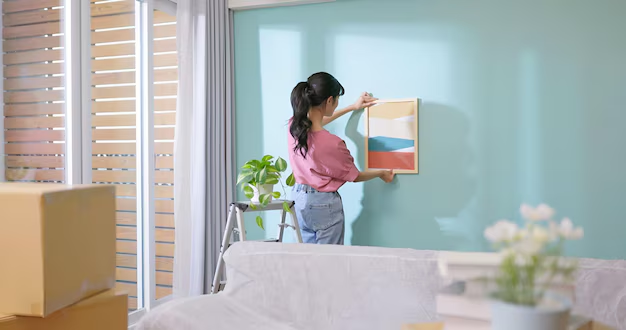
    • Custom Wall Decor is probably the easiest place to start. Gallery walls are still popular because they work. Mix family photos with art prints, postcards from trips, and maybe some pieces you’ve created yourself. The trick is to lay everything out on the floor first, then transfer it to the wall.
    • DIY wall decor can be as simple as framing fabric samples in different sizes, creating a photo collage, or even hanging plants in interesting containers. One popular trend is creating a “memory wall” with ticket stubs, photos, and small mementos from important events.

    Textile projects give you the biggest visual impact for your effort. You can:

    • Dye plain curtains or pillow covers in colors you love
    • Add embroidery or patches to existing pillows
    • Create custom throw blankets by sewing different fabrics together
    • Make wall hangings using rope, yarn, or fabric strips

    Furniture makeovers turn boring pieces into statement items. A plain dresser becomes interesting with new paint and hardware. Old chairs get new life with different fabric on the seats. Even something as simple as adding decorative contact paper to the inside of bookshelves can make a huge difference.

    Smart Ways to Use Technology

    Personalized Decor: Make Your Space Truly Yours

    Home decor trends for 2025 include lots of tech integration, but it doesn’t have to be complicated or expensive. Smart home devices are getting more affordable and easier to use, making personalization more accessible.

    Smart lighting systems let you change the mood of any room instantly. You can program different lighting scenes for morning coffee, work time, or evening relaxation. Some systems even change automatically based on the time of day or weather outside.

    Digital picture frames have gotten really good lately. Instead of choosing just one photo for a spot, you can rotate through hundreds of your favorites. This is perfect for people who take lots of photos but never know which ones to display.

    Voice-controlled devices can now manage more than just music. You can control blinds, adjust plant watering systems, and even change room fragrances with simple voice commands. This makes your space more responsive to what you need throughout the day.

    Handmade Home Decor Items on Any Budget

    Creating personalized spaces doesn’t require unlimited money. With 62% of Gen Z preferring sustainable brands, many successful DIY home decor strategies also help the environment through reusing and upcycling.

    • Thrift store finds offer amazing opportunities for customization. Look for solid wood furniture, interesting shapes, or quality materials, then transform them to match your style. A $15 side table can look like a $150 piece with the right paint job and new handles.
    • Plant personalization is budget-friendly and keeps giving back. Different plants match different personalities: succulents for low-maintenance people, herbs for cooking enthusiasts, or flowering plants for those who love color. Make custom planters using materials that reflect your style.
    • Seasonal decorating keeps things fresh without constant spending. Store seasonal items and rotate them every few months. This gives your space regular updates while maximizing what you already own.
    • Community swaps with friends can introduce new elements without spending money. Organize decoration swap parties where everyone brings items they want to change out.

    Making Small Spaces Feel Personal

    Personalized Decor: Make Your Space Truly Yours

    Limited space doesn’t mean limited personality. Small spaces often showcase personal style better because every item has to earn its place and serve multiple purposes.

    • Vertical space is your best friend in small homes. Use walls for more than just hanging pictures. Install floating shelves for displaying meaningful objects, create vertical gardens, or use wall-mounted storage that looks decorative.
    • Multi-functional pieces solve space problems while showing your style. A vintage trunk works as both a coffee table and storage. A bookshelf can divide spaces while displaying your personality through books and objects.
    • Mirrors make small spaces feel bigger while reflecting your style. Choose frames that match your taste: ornate vintage for traditional looks, sleek metal for modern vibes, or colorful painted frames for eclectic personalities.

    Ethnic Home Decor Ideas and Cultural Expression

    Your cultural background and heritage can be a rich source of unique home decor inspiration. Incorporating elements from your cultural background or cultures you admire and have experience with adds depth and meaning to your space.

    Traditional textiles make beautiful wall hangings, throw pillows, or table runners. Vintage or antique pieces from your family’s heritage can become focal points in modern settings. Cultural art, pottery, or handcrafted items tell stories and start conversations.

    The key is incorporating these elements thoughtfully rather than creating a museum display. Mix cultural pieces with modern elements to create spaces that feel lived-in and authentic rather than like themed rooms.

    Sustainable and Conscious Decorating

    Environmental awareness increasingly influences how people personalize their spaces. Supporting local artisans, buying vintage pieces, and upcycling existing items creates truly unique decor while being responsible.

    • Vintage and antique pieces provide unique personalization while supporting sustainability. These items often have better quality than new alternatives and come with interesting histories that add character to your space.
    • Local artisan support creates one-of-a-kind decor while supporting your community. Commissioned pieces from local artists, handmade pottery, or custom textiles ensure your space has items nobody else has.
    • Upcycling projects turn discarded items into personalized treasures. Old windows become picture frames, vintage suitcases transform into storage, and worn-out clothing can become pillow covers or wall art.

    Getting Started: Your Action Plan

    Personalized Decor: Make Your Space Truly Yours

    Successful personalization happens gradually. Rushing usually leads to impulse purchases that don’t really fit your style or needs.

    • Months 1-2 (Planning Phase): Document what you currently have and identify what actually makes you happy versus what’s just taking up space. Create inspiration collections, but focus on feelings and moods rather than copying specific looks.
    • Months 3-4 (Foundation Building): Invest in key anchor pieces, maybe a statement rug, quality lighting, or artwork that speaks to you. These foundational elements will guide future decisions and tie everything together.
    • Months 5-6 (Personal Touches): Add personality through accessories, textiles, and smaller decorative objects. This is when DIY home decor ideas really shine; experiment with projects, rearrange existing pieces, and fine-tune the overall feel.
    • Ongoing (Evolution): Personal style changes, and your space should too. Schedule regular reviews to assess what’s working and what isn’t. Replace items that no longer serve you and gradually add new elements that reflect your growth.

    How to Make It Happen?

    The personalized home decor trend reflects people’s desire for authentic spaces that support their real lives. Your space should tell your story, support your daily routines, and evolve as you grow.

    The most beautiful homes aren’t necessarily the most expensive or perfectly coordinated ones. They’re spaces that feel authentic, support daily life, and reflect the people who live there. Start small, think personal, and trust your instincts.

    Whether you’re working with a tiny apartment or a large house, a limited budget or plenty to spend, the principles stay the same: choose items that resonate with who you are, invest in quality pieces that will last, and never underestimate how personal touches can transform any space into a real home.

    FAQs:

    1. Why is personalized home decor on the rise?

    People want spaces that feel true and unique to them, and not just some generic, cookie-cutter space somewhere. Personalized home decor enhances comfort, creativity, and mental health.

    2. How much do Americans shell out for home decor each year?

    In the United States, people spend an average of $1,598 a year on home decorating; that number jumps to about $1,771 for millennials — who are helping lead the charge in this regard.

    3. Must personalized decor options be costly?

    No, there are plenty of DIY and thrift store projects that can be personally meaningful and low cost. Do-able projects including gallery walls,dyeing fabric and upcycling furniture could result in customized home decor that’s easy on the wallet.

    4. How is technology making house decor more customizable?

    And smart lighting, digital picture frames and voice-controlled gadgets provide customizable features that shape living spaces to moods and routines, bringing personalization within reach.

    5. Surely, personal design can work in small spaces?

    Absolutely, small spaces can feel very personal with vertical shelving, multifunctional pieces, mirrors and thoughtfully selected accents that reflect the occupant’s personality without overwhelming their environment.

  • Soundproof Insulation: Your Key to a Quieter, More Comfortable Home

    Soundproof Insulation: Your Key to a Quieter, More Comfortable Home

    Did you know that noise pollution is a big problem for over 100 million Americans every day? The World Health Organization even says that constant noise causes a huge loss of healthy life years from things like bad sleep, heart problems, and stress. If you’re fed up with hearing your neighbor’s late-night TV or the sound of traffic keeping you awake, soundproof insulation might be the answer you’re looking for.

    Home soundproofing solutions have become really popular as more people realize how much unwanted noise messes with their lives. The right acoustic insulation can change your noisy house into a peaceful sanctuary where you can finally relax and get a good night’s sleep.

    What is Soundproof Insulation, and How Does It Work?

    This special material is made to cut down on noise that travels through your walls or from the outside. Getting the right insulation installed is the key to creating a quiet space.

    Soundproof insulation isn’t like the regular stuff that just keeps your house warm or cool. Its main job is to block, absorb, and reduce the sound waves that create all that unwanted noise. Sound moves through the air and solid things by making vibrations. When those vibrations hit your ears, your brain hears them as sound. Soundproofing materials stop these vibrations in their tracks. They use dense materials that soak up the sound energy and turn it into a tiny, unnoticeable amount of heat.

    The best insulation for noise reduction uses three main tricks: absorption (soaking up sound like a sponge), blocking (putting up a barrier that sounds can’t easily pass through), and decoupling (separating wall layers so vibrations can’t travel across). Different materials are good at different things, so a mix is often best.

    Types of Soundproofing Materials

    Soundproof Insulation: Your Key to a Quieter, More Comfortable Home

    There are several types of materials you can use, and some are better for certain jobs than others. Picking the right one depends on your budget and how much noise you need to block.

    1. Fiberglass Insulation

    You might already have this in your walls for temperature control. Regular fiberglass insulation is also decent for noise insulation for home use. The tiny glass fibers trap air, but they also trap sound waves, which can reduce noise by about 4-10 decibels. It’s a low-cost option that works pretty well in wall cavities and attics.

    1. Mineral Wool (Rockwool)

    This stuff is a step up. Acoustic insulation made from mineral wool is way denser than fiberglass, so it’s much better at blocking sound. It’s made from rock or recycled steel and can cut noise by 10-15 decibels. Contractors often choose mineral wool for serious soundproofing because it’s great at handling both high-pitched and low-rumbling sounds.

    1. Mass Loaded Vinyl (MLV)

    This heavy, flexible vinyl sheet is one of the best insulation materials you can get for blocking sound. Even though it’s super thin (about 1/8 inch), MLV is so dense it can reduce noise by an amazing 20-30 decibels. It’s especially good at stopping low-frequency sounds like traffic or a bass-heavy home theater.

    1. Soundproofing Foam

    Soundproofing foam and fabric panels work a little differently. Instead of blocking noise, they absorb it. This makes them perfect for cutting down on echo and improving the sound quality inside a room. Just know they won’t stop your neighbor’s music from coming through the wall.

    Material TypeNoise ReductionBest ForCost
    Fiberglass4-10 dBBasic soundproofingLow
    Mineral Wool10-15 dBAll-around useMedium
    Mass Loaded Vinyl20-30 dBBlocking transmissionHigh
    Soundproofing FoamVariesEcho controlMedium

    Benefits of Installing Soundproof Insulation

    Soundproof Insulation: Your Key to a Quieter, More Comfortable Home

    It’s not just about peace and quiet; soundproofing has real benefits for your health and wallet. It’s an investment that pays you back in more ways than one.

    1. Better Health and Sleep

    Studies show that being around noise all the time leads to thousands of new cases of heart disease and messes with sleep for millions of people. Soundproof insulation helps protect your family’s health by creating a quieter home. That means better sleep, less stress, and better focus. Kids especially do better in quieter homes—they can concentrate on homework and sleep soundly.

    1. Higher Property Value

    A quiet home is a valuable home. Home soundproofing solutions can also improve your home’s energy efficiency, which means lower utility bills. Real estate agents will tell you that soundproofing is a big selling point, especially in loud, busy neighborhoods. A properly soundproofed home can sell for more than a similar home without it. Buyers today are willing to pay for peace and quiet.

    1. Better Daily Life

    Honestly, living in a quiet space just makes life better. You can have a normal conversation without shouting, watch a movie at a reasonable volume, and work from home without being distracted by every little noise. Noise insulation for home use lets everyone in the family do their own thing without bothering each other.

    Where to Install Soundproof Insulation? 

    To get the most bang for your buck, you need to put insulation in the right places. Sound can sneak through walls, floors, and ceilings, so you need to think about all of them.

    (i) Soundproof Walls

    Creating soundproof walls is the first step for controlling noise between rooms or from outside. Putting acoustic insulation inside wall cavities during construction is the best time to do it. If your walls are already up, you can still add blown-in insulation or hang acoustic panels on the surface to help. For exterior walls, insulation is key to blocking traffic, construction, and loud neighbors.

    (ii) Floors and Ceilings

    Insulation between floors is super important for stopping footstep noise and other impact sounds. Whether it’s kids running around or someone moving furniture, the right materials in the floor and ceiling can make a huge difference for the person downstairs. Ceiling insulation also stops noise from traveling up, which is important in multi-story homes.

    (iii) Insulation for Soundproof Rooms

    Certain rooms need special attention. Insulation for soundproof rooms like home theaters or music studios often requires a mix of different soundproofing materials to get the job done right. Home offices have also become a priority. Soundproofing them means you can take important calls and focus on work without the chaos of the household interrupting you.

    Installation: Professional vs. DIY

    Soundproof Insulation: Your Key to a Quieter, More Comfortable Home

    You have options when it comes to installation, but bigger jobs are usually best left to the pros. Doing it wrong can be a waste of time and money.

    Professional Installation

    For the best results, hire a professional. A good contractor knows which materials work best for your situation and how to install them to maximize their effectiveness. Pros can also spot tricky spots where sound can leak through, like around outlets, pipes, and vents. They have the right tools and experience to do the job right the first time.

    DIY Options

    Some simple projects are fine for DIY. You can easily add soundproofing foam panels to a wall or install door seals and sweeps. But if the job involves tearing down drywall or making big changes, it’s best to call in a professional. If you do it yourself, make sure you wear safety gear and follow the instructions carefully. Common mistakes include leaving gaps or not sealing everything up tight.

    Soundproof Windows and Doors

    Even with the best wall insulation, you can still have a noise problem. Your windows and doors are often the weakest links in your home’s sound barrier.

    Regular single-pane windows and hollow doors let in a surprising amount of noise. Upgrading to double- or triple-pane soundproof windows and doors with laminated glass make a massive difference. For doors, choose a solid-core wood or composite door instead of a hollow one, and make sure it’s sealed properly all the way around. Simple things like weather stripping and door sweeps are cheap, easy upgrades that can really help block noise.

    Maintenance and Long-term Performance

    Good news: quality soundproof insulation is built to last. When installed correctly, materials like mineral wool and fiberglass can last for decades without losing their sound-blocking power. You should just check on it every few years to make sure there’s no moisture damage or pests, as that could hurt its performance. For the most part, it’s a set-it-and-forget-it upgrade.

    Conclusion

    Investing in soundproof insulation is one of the smartest moves you can make for your home and your family. With noise pollution being a real health risk, creating a quiet space makes sense for your well-being and your property value.

    There are all kinds of home soundproofing solutions out there, so you can find an option that fits your budget and your needs. Whether you’re trying to block out noisy neighbors or just create a peaceful room to relax in, the right acoustic insulation can totally change your home for the better. Don’t let noise ruin your life. Start planning your project today and get on the path to a quieter, more comfortable home.

  • Transform Your Space: Easy Do-It-Yourself Projects for a Stylish Home

    Transform Your Space: Easy Do-It-Yourself Projects for a Stylish Home

    DIY home projects are trending in houses all over America. It’s easy to see why. Almost 4 out of 10 people fixing up their homes will spend under $5,000. And for those doing the work themselves, that number jumps to over 6 out of 10. With people spending about 37 hours on their own projects in late 2024, it’s clear that doing it yourself home improvement is becoming the smart choice for budget-conscious families.

    The best part is the savings. DIY projects cost about $2,700 each on average, while the cost of professional projects averages $8,100. That is a savings of over $5,000 for each project. That saved money can be allocated to more improvements or other family priorities. Isn’t it a better deal to save a lot? 

    Why Easy DIY Home Decor Makes Financial Sense

    Realistically, hiring contractors is expensive. With 75% of builders expecting labor shortages to be a challenge this year, those costs are not expected to decrease soon.

    Here’s what the numbers show about affordable DIY home ideas:

    • DIY home projects can save up to 83 percent compared to a contractor’s job. These are significant savings that accumulate quickly.
    • Data from the Home Improvement Research Institute (HIRI) indicates that in 2023, 52% of homeowners spent under $500 on home improvement projects, 19% spent between $500 and $999, and 17% spent between $1,000 and $4,999. 
    • The do it yourself home improvement market reached USD 0.88 trillion in 2024, indicating that millions of Americans are choosing the DIY route for their home upgrades.

    How Much Does DIY Home Decor Cost

    The DIY home decor costs will not be much, as you can do it at a minimal cost. The general cost of some basics is mentioned below. 

    • Paint projects: $50-300 per room
    • Furniture makeovers: $25-150 per piece
    • Lighting updates: $100-500 per room
    • Storage solutions: $75-400 per project

    Essential Tools for Simple DIY Home Upgrades

    Transform Your Space: Easy Do-It-Yourself Projects for a Stylish Home

    Before you start on any DIY room makeover ideas, you need some basic tools. Don’t worry, you don’t need a giant workshop to get started.

    Your Basic Tool Kit:

    • Cordless drill with bits ($60-120)
    • Level (a 2-foot and a 4-foot one are great) ($25-45)
    • Measuring tape, 25-foot ($15-25)
    • Hammer set ($20-35)
    • Screwdriver set ($15-30)
    • Safety glasses and gloves ($10-20)

    Smart Shopping Tip: Don’t buy everything at once. Buy tools as you need them for a project. Start with these basics and then add other tools when you need them. It’s better to buy one good tool than a bunch of cheap ones. A good drill can last you more than 10 years.

    DIY Wall Decor Ideas That Transform Rooms

    Walls offer the biggest opportunity for impact. Home decor DIY projects that focus on walls give you the most visual change for your investment.

    Painting Made Simple

    • Accent Walls: Just pick one wall in a room and paint it a bold color. This costs 75% less than painting the whole room but still gives you that wow factor.

    How to Prep for Paint:

    1. First, wash your walls with a little bit of soap and water.
    2. Fill in any nail holes with spackling paste.
    3. Sand any rough spots so they’re smooth.
    4. If you’re painting over a dark color, use a coat of primer first.

    Easy Painting Tricks:

    • Use painter’s tape to get super clean, straight lines.
    • Use a roller for the big areas and a brush for the edges.
    • Do a few thin coats of paint instead of one thick, gloppy one.
    • Pull off the painter’s tape when the paint is still a little wet.

    Other Cool Wall Ideas

    • Removable Wallpaper: This is a game-changer. Peel-and-stick wallpaper costs about $30-80 for a room and comes right off when you’re tired of it. It’s perfect if you rent or just like to change your style.
    • Wood Accent Walls: Shiplap or reclaimed wood gives you that popular farmhouse look. You can buy the wood for $3-8 per square foot at a home store. Or check out salvage yards for even cheaper finds.
    • Gallery Walls: Mix your family photos with cool art prints and other small decor. A great trick is to cut out paper shapes the size of your frames. Tape the paper to the wall first to figure out your layout before you start making holes.

    DIY Furniture Makeover Projects

    Transform Your Space: Easy Do-It-Yourself Projects for a Stylish Home

    Many stylish home DIY projects are all about updating old furniture. You can change the whole feel of a room just by giving a few key pieces a new look, instead of buying new stuff.

    Painting Furniture the Right Way

    • Prep is Everything: You have to sand the piece just a little bit to get rid of the shiny finish. This helps the paint stick. Then, clean it with a degreaser, especially if it’s a kitchen piece that gets greasy.
    • Best Paints for the Job:
      • Chalk paint: Super easy to use; you barely have to prep the surface.
      • Latex paint: The most affordable choice and very tough.
      • Milk paint: A natural paint that gives a cool, unique texture.

    Tips for a Great Finish:

    • Use good quality brushes. They help you avoid ugly streak marks.
    • Do 2 or 3 thin coats of paint. It looks way better than one thick coat.
    • Lightly sand between coats for a super smooth finish.

    Update the Hardware

    Changing out cabinet knobs and drawer pulls can make a piece of furniture look brand new, and it only costs about $50-200. Try to match the metals in your room. Brushed gold gives a warm look, while matte black feels more modern.
    Easy Installation: Measure the old holes before you buy new hardware. If you’re switching to a different style, you can use wood filler to hide the old holes.

    Lighting Solutions for Every Budget

    Simple DIY home upgrades for your lighting can make a room feel way more expensive and comfortable. Good lighting can even trick the eye and make a space feel bigger.

    Easy Lighting Projects to Try

    • Under-Cabinet Kitchen Lights: You can get LED strip lights for $20-50. They just plug into a regular outlet. Pick a warm white light for a cozy feel or a bright white light for when you’re cooking.
    • Swap Out Pendant Lights: Get rid of that boring ceiling light and put in a stylish pendant light. Just make sure the electrical box in the ceiling can hold the weight. And always, always turn off the power at the breaker box first.
    • Lamp Makeovers: Give an old lamp a facelift with a new shade, paint the base, or even rewire a cool vintage lamp you found. You only need wire strippers and electrical tape for basic wiring.

    Storage Solutions That Look Good

    Transform Your Space: Easy Do-It-Yourself Projects for a Stylish Home

    Home decor DIY projects that add storage are great because they fix two problems: clutter and style. Building your own storage costs so much less than buying it.

    Built-In Storage Ideas

    • Floating Shelves: Use heavy-duty brackets that can hold the weight of what you plan to put on them. Always screw them into the wall studs so they’re safe, especially in a kitchen or bathroom.
    • Window Seat with Storage: If you have an unused spot under a window, build a simple box frame with a hinged top. Add a cushion, and you have a new seat with hidden storage.
    • Closet Upgrades: You can double your closet space by adding a second rod. Add shelf dividers and use special hangers. These small changes can make a huge difference.

    Outdoor DIY Home Projects

    Your outdoor space is like another room for your house. The outdoor spaces extend your living area and can add property value. Focus on projects that are suitable for your climate and create comfort.

    • Deck and Patio Fixes: Bring a weathered deck back to life by power washing it first. Let it dry completely, then put on a quality stain in thin coats. For patios, you can create a seating area with pavers or decorative stones.
    • Garden Projects: Build some raised garden beds with cedar or composite wood. Make them no more than 4 feet wide so you can reach the middle. You can also make nice garden paths with stepping stones or gravel.

    Planning Your DIY Room Makeover Ideas

    Transform Your Space: Easy Do-It-Yourself Projects for a Stylish Home

    The secret to a great project is planning. Over 60% of homeowners went the DIY route in 2024 because it saves so much money.

    How to Prioritize Your Projects

    • Start Small: Begin with projects that have a big impact but a low cost. Things like paint, new hardware, and lighting can change a room for under $500.
    • Think About the Season: Plan your outdoor projects for when the weather is good. You can do indoor projects anytime, but remember to open windows for ventilation if you’re painting.
    • Build Your Skills: Start with easy projects to build your confidence. Every project you finish teaches you something new.

    Managing Your Budget

    • Track Everything: Keep a list of everything you spend, down to the last screw. This helps you plan for future projects.
    • Have a 20% Buffer: Trust us on this. Unexpected things always come up. Having a little extra cash set aside means you won’t have to stop in the middle of a project.
    • Be Smart About Tools: Buy good tools you’ll use a lot. For special tools you’ll only use once, just rent them.

    How to Transform Your Space?

    Affordable DIY home ideas are about more than saving money; they are about creating a space that truly reflects your personal style. With a strategic approach, you can achieve professional-looking results for a fraction of contractor costs.

    The key to successful, stylish home DIY projects is starting small, building skills step by step, and focusing on changes that make the biggest visual impact first. Whether you are updating one room or your whole house, combining good planning with quality materials and patience will give you results that improve both your daily living and your property’s value. These easy DIY home decor projects prove that anyone can transform their space.