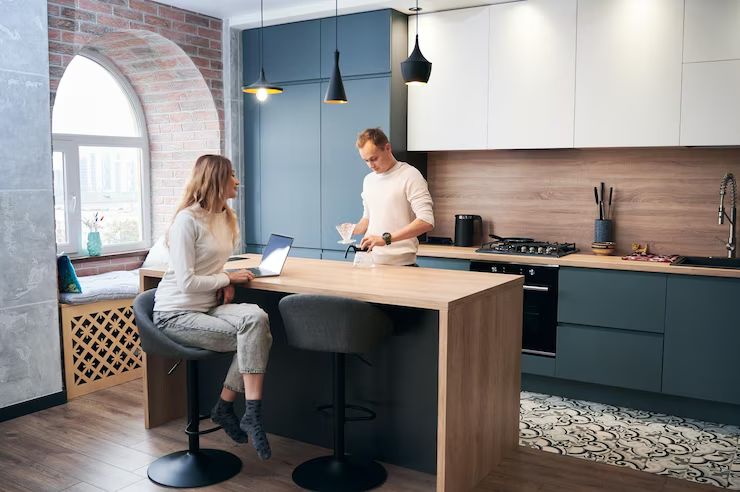
Think about your current kitchen. Is there a “junk drawer” that’s become a black hole for random stuff? Is there an awkward corner cabinet where pot lids go to disappear forever? Do you find yourself doing a frantic little dance between the fridge, the sink, and the stove every time you try to cook a simple meal? If you nodded along to any of that, you’re not alone.
This is precisely why the old-school, one-size-fits-all kitchen is dying. It’s not just a feeling; the numbers back it up. The US modular kitchen market was valued at a whopping USD 8.35 billion in 2024 and is on track to hit USD 12.21 billion by 2032. That’s a steady 5.20% growth year after year.
This boom isn’t just about people wanting prettier cabinets; it’s a full-blown movement towards smarter, more functional living. Homeowners are getting wise to the fact that a well-planned kitchen can genuinely make daily life less chaotic, and modular kitchen design ideas are leading the charge.
Understanding the Kitchen Work Triangle
Before we even talk about layouts, we need to talk about the foundation of every single functional kitchen on the planet: the kitchen work triangle. This isn’t some abstract theory cooked up by designers; it’s a time-tested ergonomic principle that dictates the flow of your kitchen. It’s the invisible geometry that separates a kitchen that works for you from one that works against you.
The three points of this all-important triangle are your main work zones: the refrigerator (for storing food), the sink (for cleaning and prep), and the stove (for cooking). The idea is to place these three points in a way that makes moving between them effortless. The rules are pretty simple but non-negotiable for an efficient space:
- No leg of the triangle should be shorter than 4 feet (1.2 m) or longer than 9 feet (2.7 m).
- The total distance of all three sides added together should be between 13 and 26 feet (4–8 m).
Why does this seemingly small detail matter so much? Because it’s all about efficiency and safety. When the triangle is too small, you feel cramped and cluttered. When it’s too large, you’re practically running a marathon just to make spaghetti. A well-executed work triangle means no more frantic dashing across the room for a forgotten onion or bumping into your partner who is trying to get a glass of water. It makes meal prep feel intuitive and natural, drastically reducing the chaos and keeping your kitchen organized without you even trying.
Best Modular Kitchen Layouts for Every Home Type

Modular kitchen design ideas work best when they match your real lifestyle. There are three popular layouts of the modular kitchen: L-shaped layout, U-shaped design, or parallel setup.
The L-Shaped Modular Kitchen: Most Popular Choice
L-shaped modular kitchen designs dominate the market for good reason. This layout fits most homes and creates that perfect work triangle naturally. It’s like the Honda Civic of kitchen layouts—reliable, practical, and works for almost everyone.
Perfect for:
- Small kitchen layout tips – fits in tight spaces
- Corner spaces that traditional kitchens waste
- Open floor plans where the kitchen flows into the living room
- Families who cook together – plenty of counter space
The L-shape naturally creates an efficient workflow. Put your sink on one wall, stove on the other, and fridge in the corner. It’s a kitchen planning guide with basics that work every time.
Storage bonus: The corner can house a lazy Susan or magic corner unit, turning wasted space into valuable storage.
The U-Shaped Kitchen Design: Maximum Efficiency
U-shaped kitchen design is the luxury sedan of kitchen layouts. It gives you three walls of cabinets and counters, perfect for serious cooks who need multiple work zones.
Ideal for:
- Large families who cook elaborate meals
- Homes with dedicated kitchen space (150+ sq ft)
- Serious home cooks who need multiple prep areas
- People who love entertaining guests
The U-shape creates the ultimate work triangle. You can have a prep zone, cooking zone, and cleanup zone all clearly defined. It’s like having a modern kitchen’s interior command centre where everything has its place.
Design tip: Keep the opening at least 8 feet wide. Nobody wants to feel trapped in their kitchen while cooking.
The Parallel Kitchen Layout: The Efficiency Engine
Also known as a galley-style kitchen, the parallel kitchen layout is the undisputed champion of narrow spaces. Think of it as the perfectly designed, hyper-efficient New York City apartment of kitchen layouts. It consists of two parallel counters with a walkway in between, packing maximum functionality into a minimal footprint.
Best for:
- Small kitchen layout tips – works in 6-8-foot-wide spaces
- Single cooks who want everything organized
- Rental properties where space is a premium
- Busy professionals who need quick meal prep
Two parallel counters with a walkway between them. Place your sink and stove on one side and fridge and storage on the other. It’s like having a kitchen assembly line that makes cooking feel professional.
Storage hack: Use tall cabinets that reach the ceiling. In parallel kitchens, vertical space is your best friend for space-saving kitchen designs.
Island and Peninsula Modular Kitchens for Open Floor Plans
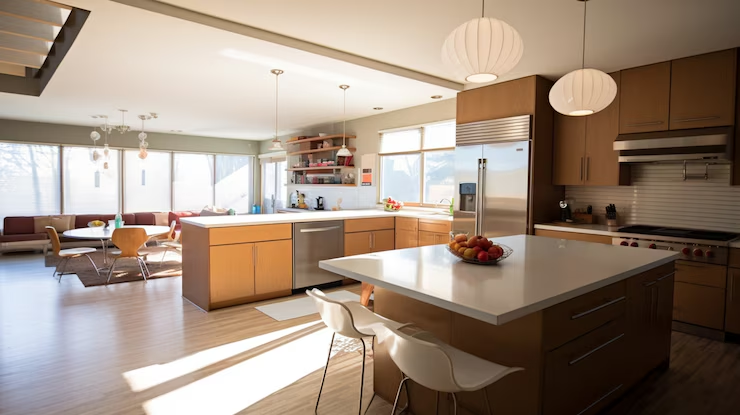
In today’s open-concept homes, the kitchen is no longer just a room for cooking; it’s the heart of the home. This is where kitchen islands and peninsulas come in. They aren’t just trendy additions; they are functional powerhouses that can solve a multitude of design challenges and completely transform the social dynamic of your space.
The island layout is perfect for:
- Open floor plans where the kitchen is part of the living area
- Large families who need extra prep space
- Homes with a breakfast nook need
- Anyone who loves casual entertaining
Peninsula layout (island alternative):
- Medium-sized kitchens that want island benefits
- L-shaped kitchens that need more counter space
- Budget-conscious renovations
- Kitchens that need room division from living areas
Size rule: Allow at least 3 feet of walkway around all sides. Your island should enhance flow, not create traffic jams.
Smart Storage Solutions for Modular Kitchens
You can have the most beautiful, perfectly laid-out kitchen in the world, but if your storage is an afterthought, it will always feel cluttered and chaotic. A truly functional modular kitchen setup is built around smart kitchen storage solutions. This isn’t just about having enough cabinets; it’s about having the right kind of storage in the right places, creating zones that match how you actually cook.
Think like a chef and create dedicated zones:
- Consumables Zone: Your pantry and refrigerator for food storage.
- Non-Consumables Zone: Upper cabinets near the dishwasher for everyday dishes, glasses, and mugs.
- Cleaning Zone: The area under the sink for cleaning supplies.
- Preparation Zone: Drawers and counters with easy access to knives, cutting boards, mixing bowls, and spices.
- Cooking Zone: Cabinets and deep drawers near the stove for pots, pans, and baking dishes.
Best Storage Units for Modular Kitchens and Their Cost:
| Storage Type | Best For | Typical Cost Range |
| Soft-close drawers | Heavy items, frequent use | $50-150 per drawer |
| Pull-out pantry | Dry goods, canned items | $200-400 |
| Corner carousel | Awkward corner spaces | $150-300 |
| Tall units | Maximum vertical storage | $400-800 |
Modular Kitchen Cabinet Arrangement Tips
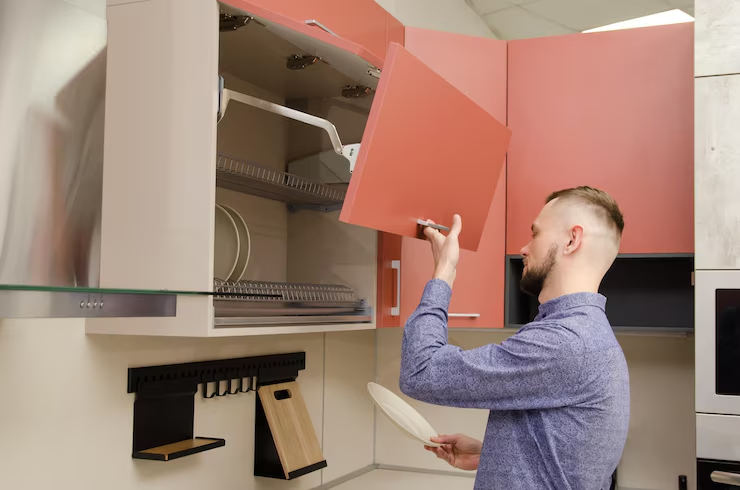
Kitchen cabinet arrangement can make your modular kitchen feel twice as big. It’s not just about having enough cabinets – it’s about putting them in the right places.
Upper cabinet guidelines:
- Keep everyday dishes between 15 and 48 inches from the counter.
- Store lightweight items only (dishes weigh more than you think).
- Leave 18 inches between the counter and upper cabinets.
- Use glass doors for items you want to display.
Base Cabinet Strategy: Drawers vs. Shelves
- Heavy items go in the lower drawers.
- Most-used items at waist height
- Deep drawers beat deep shelves every time.
- Corner cabinets need special hardware to be useful.
How to Plan Your Modular Kitchen Setup the Right Way
Modular kitchen setup tips start with measuring your space properly. Too many people skip this step and end up with beautiful kitchens that don’t work well.
Critical measurements:
- Total room dimensions (length × width × height)
- Window and door locations (affect cabinet placement)
- Electrical and plumbing locations (expensive to move)
- Ceiling height (determines cabinet height options)
Planning checklist:
- Draw your kitchen to scale
- Mark all fixed elements (windows, doors, pipes).
- Plan your work triangle first
- Add storage around the triangle
- Consider traffic flow from other rooms
Modular Kitchen Design on a Budget: Cost-Saving Tips

The modular kitchen market size is forecast to increase by USD 15.11 billion at a CAGR of 6.43% between 2023 and 2028, but you don’t need to spend a fortune. Smart planning gives you high-end looks on reasonable budgets.
Money-saving strategies:
- Keep plumbing in place (moving pipes costs $500-1500).
- Choose standard sizes (custom sizes cost 30-50% more).
- Mix high-end and budget elements (splurge on hardware, save on boxes)
- Plan for phases (install basics first, upgrade later)
Budget breakdown:
- Cabinets: 35-40% of total budget
- Appliances: 25-30% of total budget
- Countertops: 15-20% of total budget
- Installation: 10-15% of total budget
Conclusion: Why a Well-Planned Modular Kitchen Is Worth It
Modern modular kitchens offer incredible storage innovations that make life so much easier. Forget getting on your hands and knees to reach a pot in the back of a deep cabinet; pull-out drawers in base cabinets bring everything to you.
Those infuriating corner cabinets are tamed with Lazy Susans or multi-tiered carousels. Tall pantry units with internal pull-out drawers let you see everything at a glance, so that can of tomato paste from 2019 doesn’t get lost in the back. These aren’t just bells and whistles; they are ergonomic improvements that you will appreciate every single day.
Leave a Reply